
Beyond Rice & Curry: 13 Food Experiences on a Sri Lanka Motorcycle Tour
Sri Lankan cuisine is finally getting some of the international recognition it deserves. From acclaimed restaurants such as Hoppers and Rambutan in London to Sri Lankan-inspired dishes appearing on MasterChef Australia, the island’s rich culinary traditions are reaching an increasingly global audience. In September 2026, Sri Lanka even won the Best Food award at the Commonwealth Food Fair in Rome for the third consecutive year.
But where better to discover Sri Lankan food than in Sri Lanka itself?
Having grown up in Italy, I’ve always considered good food an essential part of life. A meal isn’t simply something you squeeze into the day because you’re hungry. It’s something to look forward to, enjoy and, ideally, share with good company.
Over the years, I’ve travelled on motorcycle tours where meals became almost an afterthought. The same restaurants, similar dishes day after day, sometimes uninspiring, occasionally downright bland. I understand why it happens. Keeping meals predictable makes logistics easier and costs more manageable. But it also takes away an important part of the holiday experience.
And I know myself well enough to admit that a disappointing meal can put me in a bad mood!
When you have just one or two weeks to explore a country, why settle for ordinary food when there are so many wonderful experiences waiting to be discovered?
That’s one of the reasons I put so much attention into the culinary side of our motorcycle tours. I don’t believe a great holiday should be measured only by the quality of the hotels, the motorcycles or the roads we ride. What happens between those rides matters just as much.
Finding the right places takes time. It means exploring small family-run eateries, trying restaurants, meeting local people and occasionally arranging experiences that wouldn’t normally be available to passing travellers. Sometimes it also means spending a little more on a particularly good meal rather than choosing the easiest or cheapest option.
To me, that’s money well spent.
Of course, not every meal needs to be expensive or elaborate. A delicious homemade curry for a couple of euros can be every bit as memorable as a seafood feast overlooking the ocean. What matters is the quality, the variety and the experience behind it.
Ultimately, good value isn’t simply about how much a tour costs, but how much thought, care and enjoyment goes into every part of it.
And food is one of those details that can turn a good motorcycle tour in Sri Lanka into an unforgettable one.
Here are 13 food experiences that illustrate what I mean.
1. The Pol Athu Kade: Traditional Sri Lankan Food at Its Best
Forget fancy restaurants, elaborate menus and polished interiors. Sometimes, the best meals are served in the simplest places.
A Pol Athu Kade, literally a shop or eatery made with coconut palm leaves, is a traditional roadside establishment where you can experience authentic Sri Lankan home-style cooking. Often family-run, these rustic eateries typically feature thatched roofs, simple wooden furniture and an inviting display of freshly prepared dishes.
Lunch usually revolves around Sri Lanka’s beloved rice and curry, although calling it a single dish hardly does it justice.
Imagine a buffet of traditional clay pots lined up, each containing a different freshly prepared curry. Pumpkin, jackfruit, beetroot, aubergine, green beans, dhal and countless other ingredients are transformed into colourful dishes using coconut milk, aromatic spices and herbs. Even the same curry can taste completely different from one kitchen to another, with recipes often passed down through generations.
This is where the experience becomes particularly enjoyable. We introduce our guests to the different dishes, explaining the ingredients, flavours and sometimes unfamiliar vegetables, before letting everyone help themselves to whatever catches their attention. It’s the perfect opportunity to try something new, discover unexpected favourites and perhaps go back for a second helping.
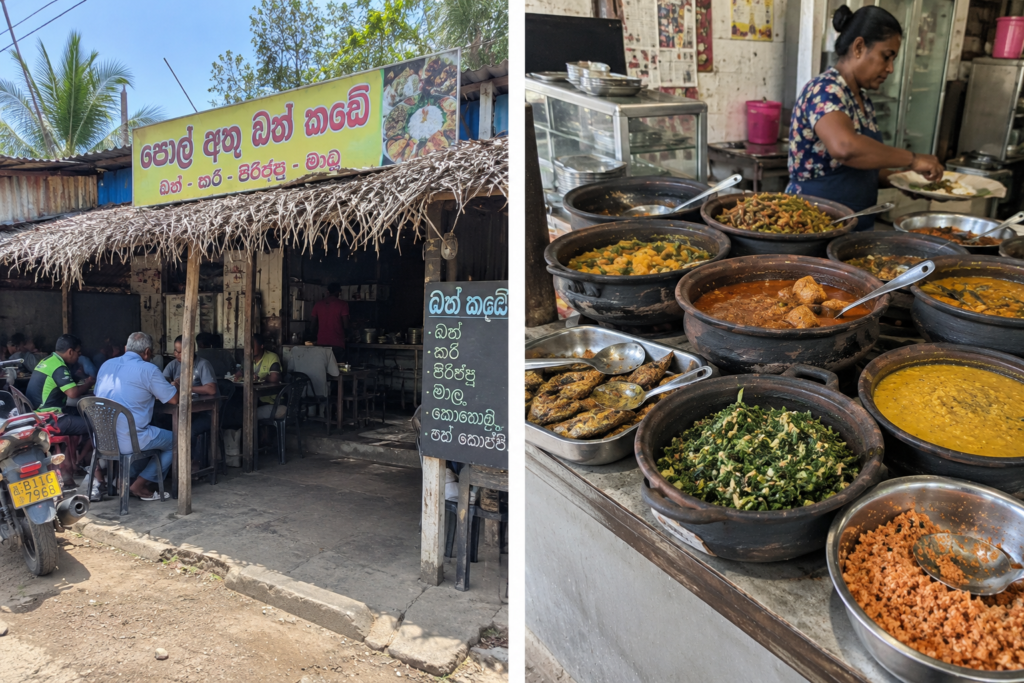
These buffets generally operate at a fixed price, with a selection of vegetable curries, rice and accompaniments included. Those looking for something extra can usually add freshly fried fish or chicken for an additional charge.
But the real charm goes beyond the food. It’s the atmosphere, the family preparing and serving your meal, the local workers stopping for lunch and the opportunity to experience a little slice of everyday Sri Lankan life.
These are exactly the kinds of places we enjoy discovering and including in our motorcycle tours. They may not look particularly impressive from the road, but they often deliver some of the most memorable meals of the journey.
And the price? A generous traditional rice and curry buffet generally costs around LKR 500–1,200 (€1.40–3.40) per person, with fried fish or chicken usually charged separately. It’s one of the most affordable and rewarding dining experiences on the island.
2. The Roadside Fruit Stall: A Refreshing Taste of the Tropics
One of the great pleasures of travelling through Sri Lanka by motorcycle is the freedom to pull over whenever something catches your attention. And with colourful fruit stalls scattered along the roads, there’s always a good excuse to stop!
Depending on the region and season, you’ll find everything from juicy pineapples, papayas and watermelons to mangoes, rambutan, mangosteen and wood apples. Some fruits might be familiar, while others can be a completely new discovery.
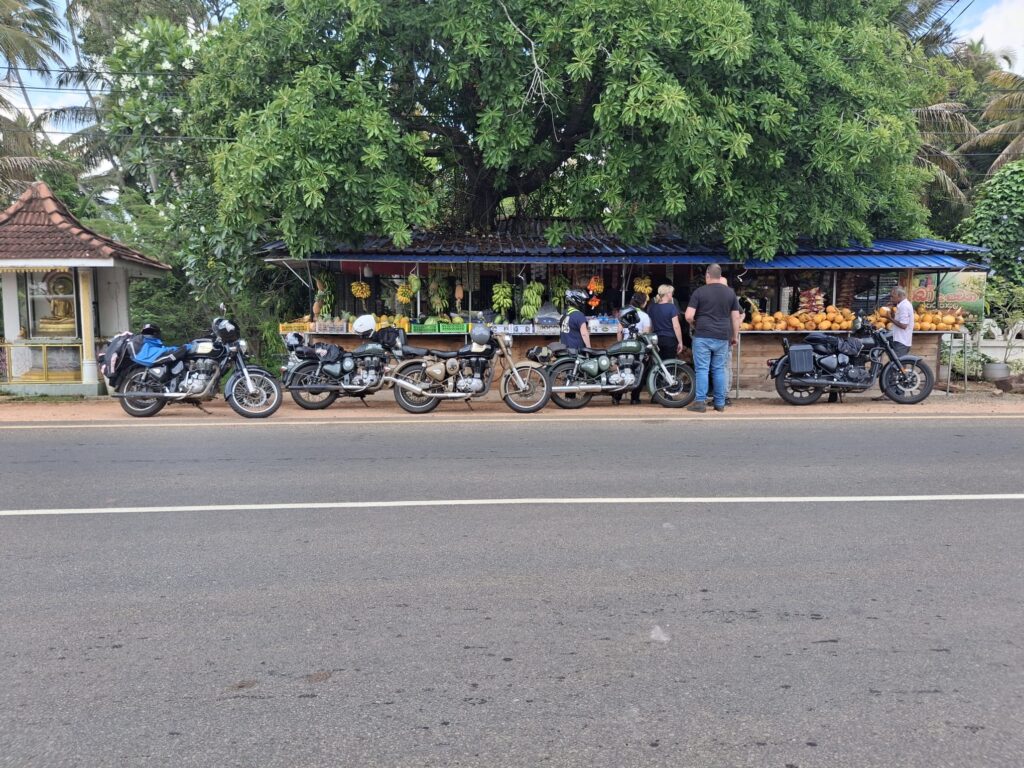
Then there’s the king coconut, or thambili, perhaps Sri Lanka’s most iconic natural refreshment. You’ll see these bright orange coconuts piled up beside the road, ready to be opened with a few skilful swings of a machete. The refreshing coconut water is particularly welcome after a couple of hours riding in the tropical heat. And once you’ve finished drinking, don’t forget to ask the vendor to split the coconut open so you can scoop out the soft flesh inside.

These stops are rarely planned down to the last detail. We might spot a stall selling particularly tempting pineapples, or a vendor with a basket of freshly harvested rambutan, and decide it’s time for a short break.
It’s also a chance to interact with local vendors, observe everyday life and discover just how much variety this tropical island produces.
And the best part? A freshly opened king coconut generally costs around LKR 150–300 (€0.40–0.85), while a generous portion of freshly cut pineapple or other seasonal fruit might cost LKR 300–600 (€0.85–1.70).
Sometimes, the simplest pleasures make the best memories.
3. The Bakery in the Middle of Nowhere: Sri Lanka's Short Eats Culture
You’re riding along a quiet road, surrounded by tea plantations, dense forests or small rural villages, when suddenly a little bakery appears out of nowhere. A few plastic chairs, a glass display cabinet filled with pastries, and the irresistible smell of freshly baked bread. It’s the perfect excuse to pull over.
Bakeries are an essential part of everyday life in Sri Lanka, and you’ll find them almost everywhere, from busy city streets to the most unexpected corners of the countryside. They offer an incredible variety of snacks, locally known as short eats, which are perfect for a quick break during a motorcycle journey.
Among the favourites are fish buns, vegetable roti, spicy fish rolls, patties and cutlets, alongside sweet treats such as kimbula banis (crocodile-shaped sugar buns) and maalu paan, the popular triangular fish-filled bread.
And of course, no bakery stop would be complete without a cup of traditional Sri Lankan milk tea, usually served strong, sweet and piping hot.
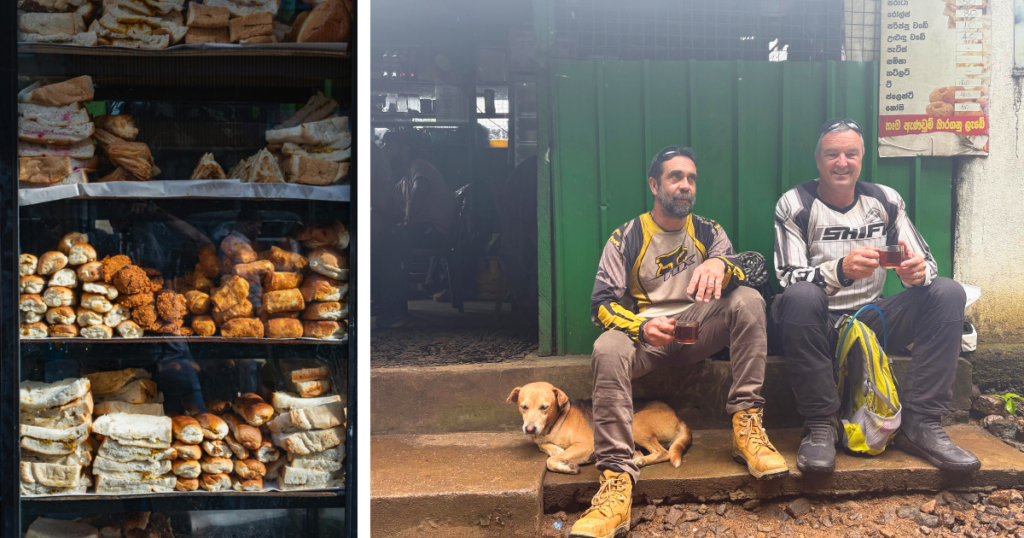
What makes these places special isn’t necessarily the food alone, but the atmosphere. You might find yourself sitting beside schoolchildren enjoying an afternoon snack, local workers taking a break or villagers stopping for a quick cup of tea. It’s another opportunity to observe the everyday rhythm of Sri Lankan life, far removed from the usual tourist attractions.
Some of our most memorable stops have been at tiny bakeries along remote roads, where you wouldn’t expect to find anything at all. These are rarely places you’ll discover in a travel guide, and that’s precisely what makes them interesting.
A typical short eat costs around LKR 100–300 (€0.30–0.85), while a cup of milk tea is usually LKR 100–250 (€0.30–0.70). For just a couple of euros, you can enjoy a satisfying snack and a little slice of local life.
Sometimes, all it takes to make a memorable stop is a good fish bun, a hot cup of tea and absolutely no rush to get back on the motorcycle.
4. Jaga Food, Polonnaruwa: Over 30 Curries and One Unforgettable Host
Not every memorable food experience has to be off the beaten track. Sometimes, even a restaurant designed primarily for tourists can be an absolute gem, and Jaga Food, near Polonnaruwa, is a perfect example.
Located in the heart of Sri Lanka’s Cultural Triangle, it’s one of our favourite lunch stops when exploring the ancient cities of Polonnaruwa and Sigiriya. We include this experience in several of our itineraries, including our Journey in the Tropical Pearl motorcycle tour. And there’s a good reason we keep coming back.
Every day, the kitchen prepares an extraordinary selection of over 30 different curries, beautifully displayed in traditional clay pots. But what makes this place particularly clever is that beside each pot you’ll find the raw ingredients used to prepare the dish. It’s a simple but brilliant idea, especially when you’re trying to distinguish between unfamiliar vegetables, leaves, roots and fruits that you’ve probably never encountered before.
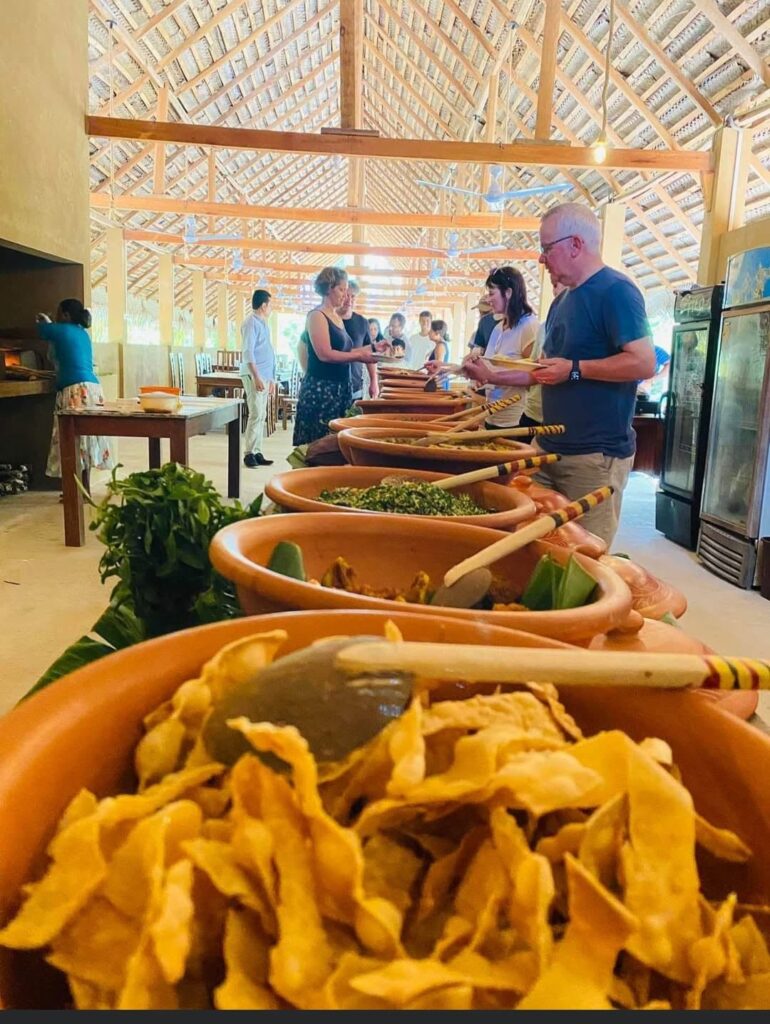
Then there’s the owner, a character in his own right. With his unmistakable English accent, charismatic personality and entertaining way of speaking, he personally introduces the different curries, explaining what goes into each one. His presentation is almost as memorable as the food itself, and with so many dishes to choose from, it’s certainly helpful!
But perhaps the most ingenious aspect is how the buffet caters to different tolerances for spicy food. Only a dedicated section of six or seven curries is prepared with a serious chilli kick, including the delicious traditional black pork curry (kalu pol pork curry), one of my absolute favourites. The remaining dishes are prepared without excessive heat, allowing even those who struggle with hot chillies to discover the wonderful complexity of Sri Lankan spices without setting their mouths on fire.
It’s a great way to appreciate the difference between spiced and spicy, something that often gets lost when people talk about Sri Lankan cuisine.
Meanwhile, in the open kitchen, fresh coconut roti is prepared over a wood fire, filling the air with the irresistible aroma of freshly cooked flatbread.
The whole experience is part restaurant, part introduction to Sri Lankan ingredients and cooking traditions. You can sample familiar favourites, experiment with completely new flavours and discover just how much variety exists beyond the usual rice and curry.
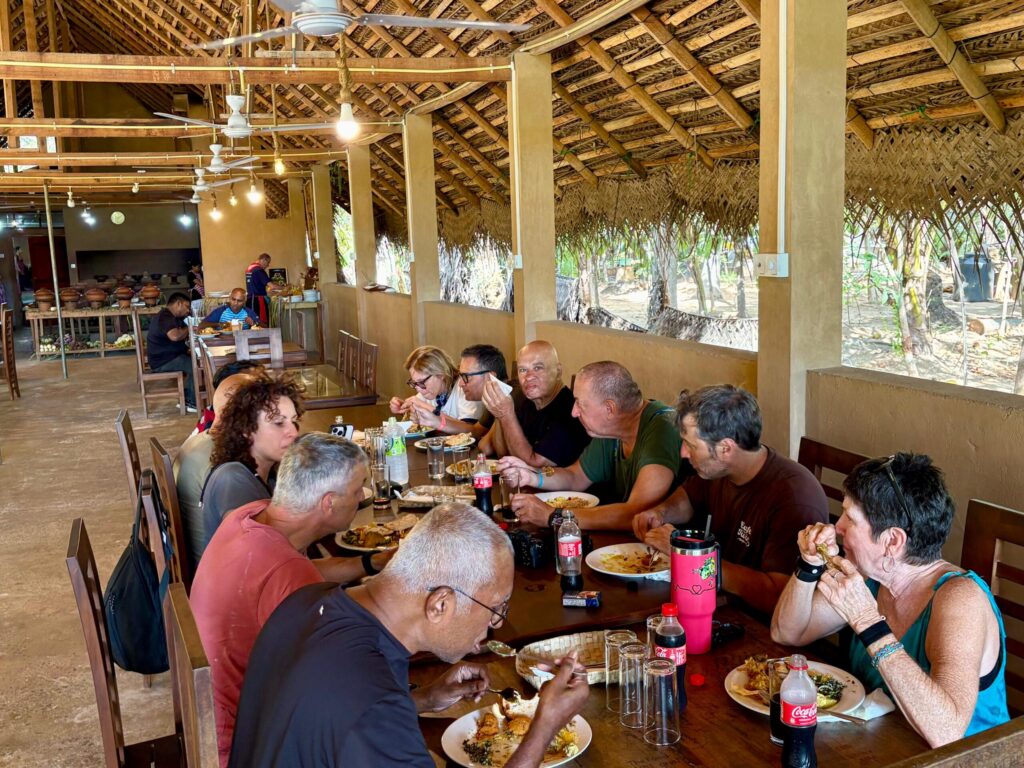
Yes, Jaga Food is touristy, and proudly so. But it’s also a brilliantly conceived experience that delivers exactly what visitors are looking for: delicious traditional food, an impressive variety of dishes and a host who makes the whole experience entertaining.
If you’re visiting Sigiriya or Polonnaruwa, this is one lunch stop I wouldn’t miss.
Indicative budget: approximately LKR 2,000–3,500 (€5.70–10) per person. Prices should be confirmed before visiting.
5. From the Fish Market to the Grill: A Seafood Experience in Nilaveli
Sri Lanka is an island surrounded by the Indian Ocean, so it’s hardly surprising that seafood plays an important role in local cuisine. But rather than simply ordering fish from a restaurant menu, why not take the experience one step further and choose your own catch?
That’s exactly what we like to do when our motorcycle tours take us to Nilaveli, on Sri Lanka’s northeastern coast.
The experience begins at the wholesale fish market in Trincomalee, where fishermen, traders and vendors gather to buy and sell the day’s catch. Depending on the season and what the boats have brought ashore, you might find tuna, snapper, trevally, prawns, squid and a variety of other seafood.
Walking through the market is an experience in itself. It’s lively, noisy, sometimes chaotic, and offers a fascinating glimpse into the daily routines of the local fishing industry. You can watch the vendors preparing their fish, discover unfamiliar species and perhaps try your hand at a little friendly bargaining.
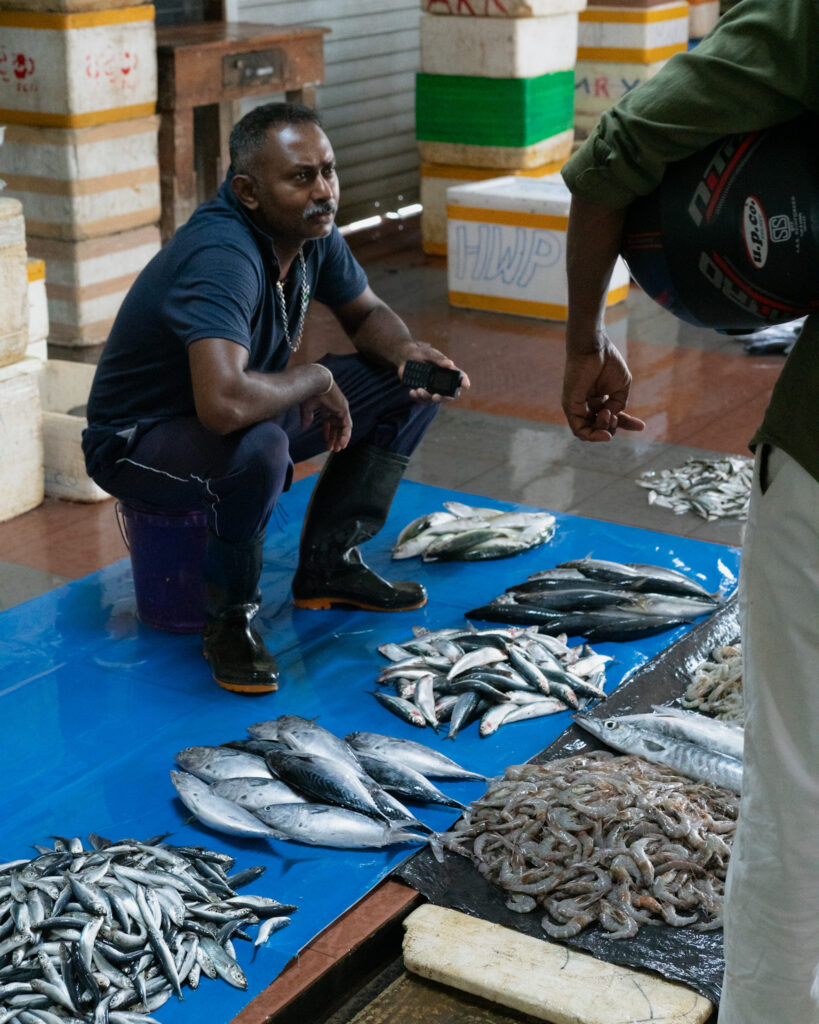
Once we’ve selected our seafood, we take it back to Nilaveli, where we arrange for our hotel or a local restaurant to prepare it for us. Whether grilled with a little garlic, lime and local spices or cooked according to a traditional recipe, seafood this fresh rarely needs much to become a delicious meal.
And there’s something particularly satisfying about sitting down to dinner knowing that just a few hours earlier you were choosing the very fish that’s now on your plate.
And the cost can be surprisingly reasonable. On our last visit, we spent approximately €5 per person on fresh seafood at the wholesale market. We then paid for the additional ingredients and left a generous tip for the hotel staff who prepared everything for us. Naturally, prices depend on the day’s catch, the type of seafood and the arrangements made for cooking, but it’s a wonderful example of how a memorable culinary experience doesn’t necessarily have to be expensive.
While we particularly enjoy doing this in Trincomalee and Nilaveli, the experience is by no means limited to the northeast coast. With fishing communities scattered around the island, similar market-to-table experiences can be arranged in many coastal destinations throughout Sri Lanka.
It’s not simply about eating fresh seafood. It’s about experiencing the journey from the fishing boat to the market and finally to your plate, while discovering another fascinating aspect of everyday life in Sri Lanka.
And when that meal is enjoyed beside the ocean, with the sound of the waves in the background, it tastes even better.
6. Slightly Chilled, Kandy: Sometimes You Just Need Something Different
Sri Lankan food is delicious, but after several days of rice and curry, even the most adventurous travellers might start craving something different. And that’s perfectly understandable. After all, a motorcycle holiday should be about enjoying yourself, not feeling obliged to eat local food at every meal.
That’s one of the reasons we love taking our guests to Slightly Chilled, a popular restaurant and pub overlooking the city of Kandy.
Run by Michael, from the UK, and Kate, from China, Slightly Chilled brings together two different culinary traditions, and both are taken seriously. Michael personally visits Kandy’s Central Market every day to select fresh groceries, while Kate has trained the kitchen staff in Chinese cooking techniques. They even make their own noodles from scratch, and they’re absolutely fantastic.
The menu offers plenty of variety. Among my personal Western favourites are the fish and chips, beef burgers and beef steak. But the Chinese dishes are equally tempting, particularly the sizzling plates that arrive at the table still bubbling and steaming.
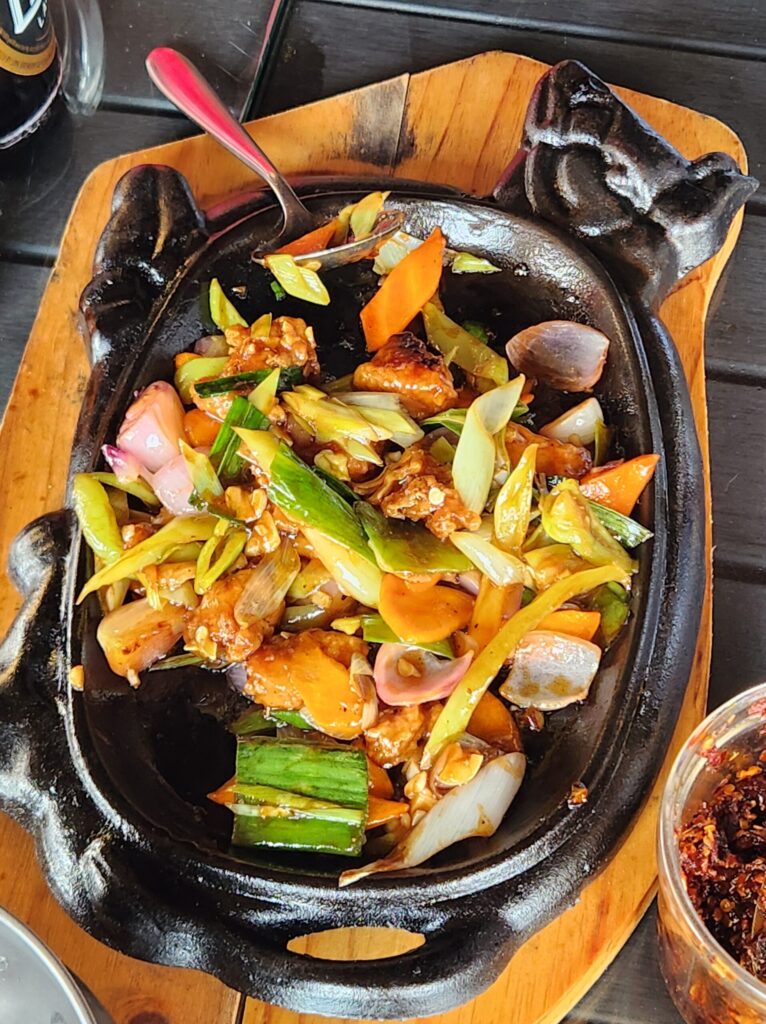
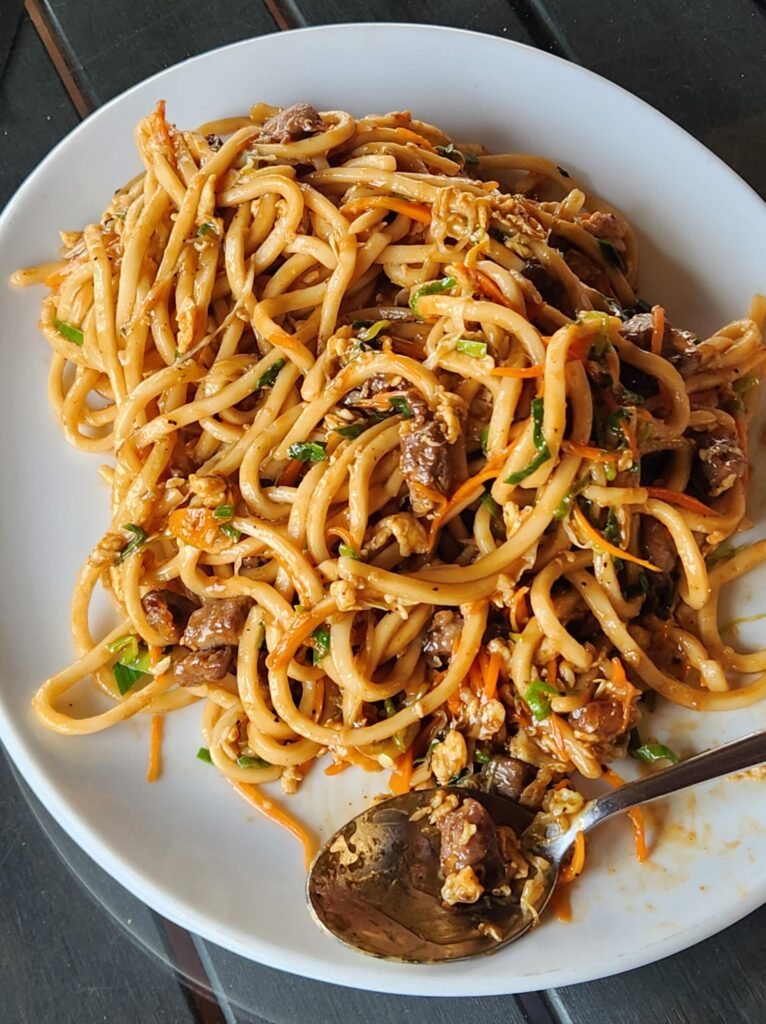
There’s also a small but delicious selection of appetisers, including spring rolls, dumplings and their signature prawns with wasabi mayonnaise, which are definitely worth trying.
When we visit with our tour groups, we like to give everyone a choice. Those craving Western food can order their own individual dish, while guests interested in Chinese cuisine are encouraged to order several different dishes for the table and share them. It’s a much more enjoyable way to discover new flavours, and there’s usually plenty of discussion about which dish deserves another helping!
The atmosphere is another reason we keep coming back. Relaxed and informal, with a lively pub feel and lovely views across Kandy, it’s a great place to unwind, share stories from the day’s ride and enjoy an evening without rushing.
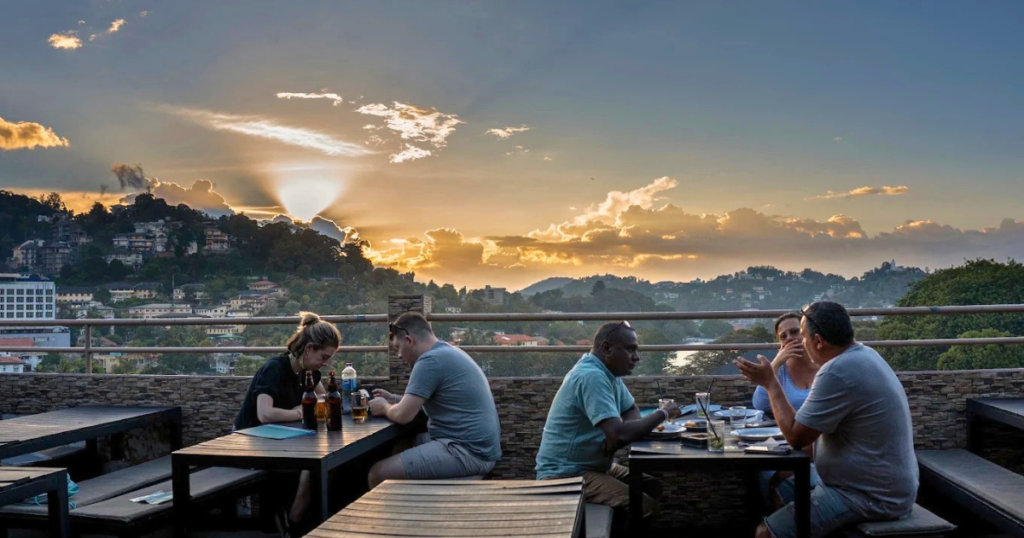
For me, Slightly Chilled perfectly illustrates an important part of our approach to food on motorcycle tours in Sri Lanka: authentic local cuisine is essential, but variety and quality matter just as much.
Sometimes, after a day navigating winding mountain roads, a plate of homemade Chinese noodles, a perfectly cooked steak or some proper fish and chips is exactly what you need.
Indicative cost: Approximately LKR 2,000–4,500 (USD 6–14) per person for a main course, depending on your choice. Drinks and appetisers are extra.
7. The T.E.A. Project, Galaha: A Homemade Lunch with a Purpose
Some of the most memorable meals on a motorcycle tour aren’t served in restaurants. Sometimes, they’re enjoyed in places you would never have discovered on your own, where the people you meet are just as important as the food on your plate.
One such place is The T.E.A. Project, a community initiative in Galaha, nestled among the tea plantations of Sri Lanka’s central highlands.
The project works to improve educational opportunities for children from tea estate communities, where many families depend on modest wages earned through plantation work. For generations, limited access to resources and opportunities has made it difficult for children to pursue different futures, with many eventually following their parents into the same industry.
Breaking this cycle of limited social mobility is one of the reasons initiatives like The T.E.A. Project are so important. By providing education, support and opportunities for personal development, the project helps children build the confidence and skills to imagine a future beyond the circumstances into which they were born.
And this is where our food experience comes in.
The project has its own kitchen, where staff prepare meals every day for children attending its preschool and after-school programmes. When we visit, the same team prepares a special homemade Sri Lankan lunch for our group.
There’s something particularly enjoyable about sitting down to a meal prepared in a kitchen that serves the local community every day. It’s simple, authentic home cooking, shared in a setting where the food has a meaning that goes well beyond what’s on the plate.
The T.E.A. Project is not a restaurant, and visitors cannot simply turn up and order lunch. The kitchen primarily serves the children attending the project’s programmes. However, with prior arrangements, the staff can also prepare a homemade Sri Lankan lunch for visiting groups. Anyone interested in this experience should contact the organisation well in advance to enquire about a visit and arrange a meal.
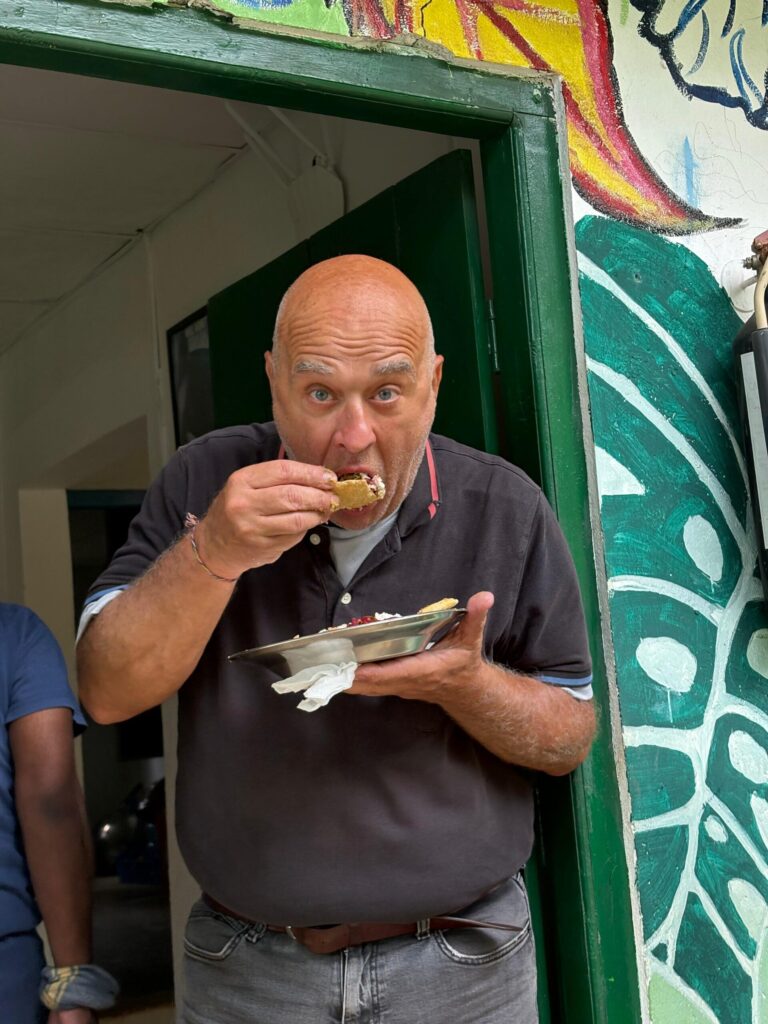
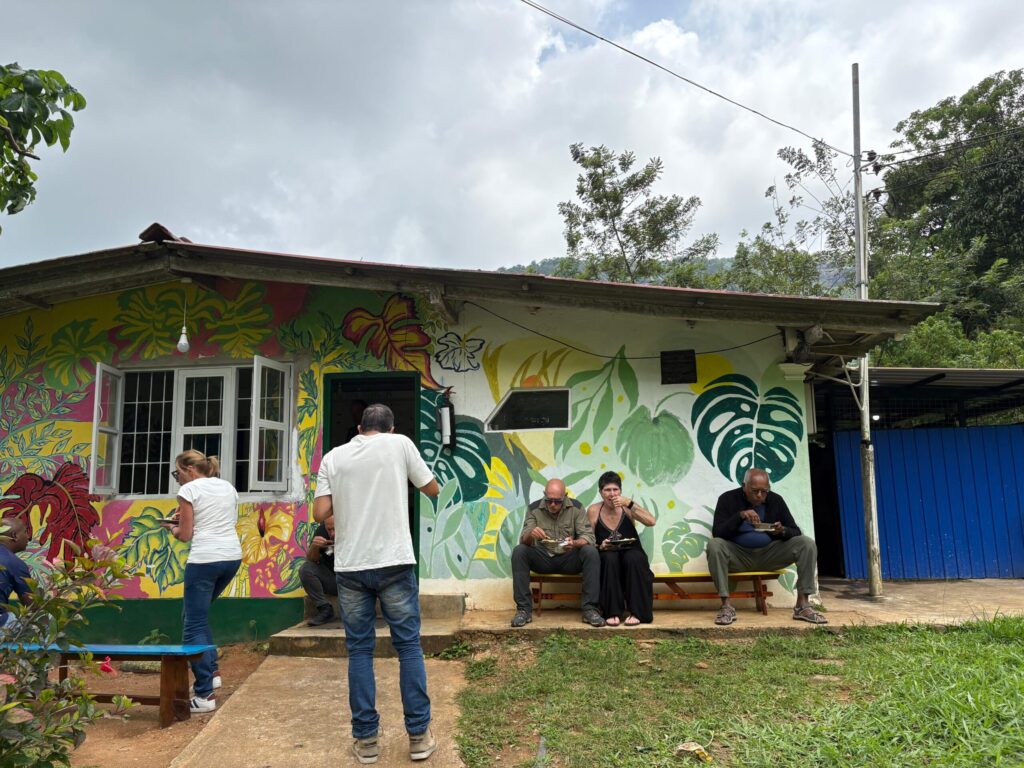
Our visits also give guests the opportunity to learn about the project’s work and better understand life in Sri Lanka’s tea estate communities.
At Ride On, we believe tourism should contribute positively to the communities we visit. That’s why we choose to support The T.E.A. Project and introduce our guests to the important work they do. During our visits, we invite participants to make a voluntary donation if they wish, with each person free to contribute whatever amount they feel comfortable with. There’s absolutely no obligation, but it’s a wonderful opportunity to give something back to a community that welcomes us so warmly.
It’s a reminder that travelling by motorcycle isn’t just about beautiful roads and spectacular scenery. It’s also about discovering the communities behind those landscapes and, whenever possible, making a positive contribution.
And while the homemade lunch is certainly something to look forward to, it’s the people, their stories and the purpose behind the project that make this experience truly unforgettable.
I know this is not entirely about food, but it is about Sri Lanka and its reality. Watch the video below to learn more about the T.E.A. Project.
8. Roti and Tea in the Highlands: The Beauty of Simple Things
Not every memorable food experience in Sri Lanka involves an elaborate meal, an extensive menu or even a proper restaurant. Sometimes, all it takes is a freshly cooked roti, a cup of hot tea and a little roadside shop in the middle of nowhere.
Near Ohiya Railway Station, high in Sri Lanka’s central mountains, there are a handful of tiny shops, some of them family-run. They’re incredibly simple places, with basic furnishings, a few ingredients and a wood-fired stove where the day’s food is prepared.
Don’t expect a menu. What you see is usually what you get.
There might be a few freshly made pol roti, the traditional Sri Lankan flatbread prepared with grated coconut, served with a fiery chilli sambol. Perhaps a couple of buns, some bananas and little else. To drink, there’s black tea, served plain or with fresh ginger.
And that’s pretty much it.
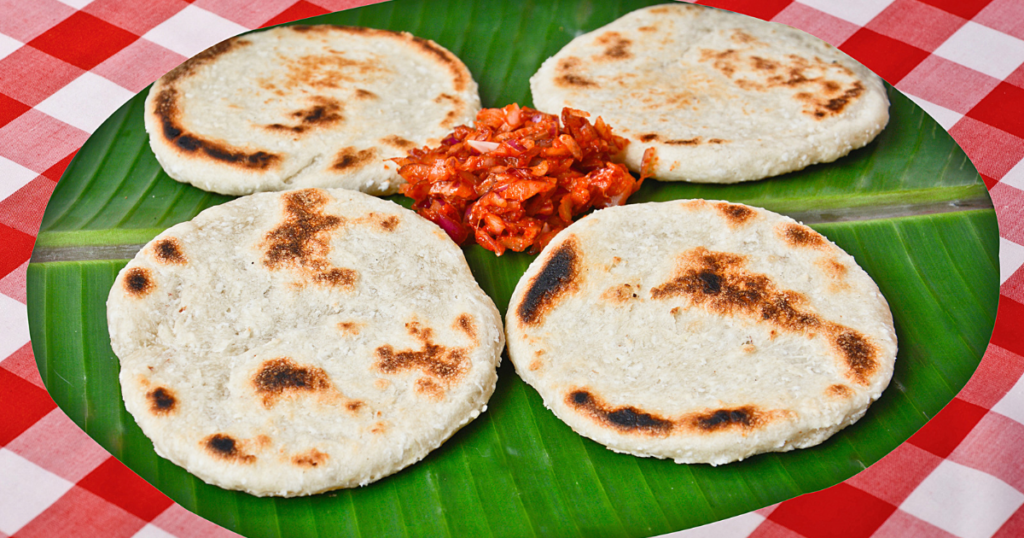
But there’s something wonderful about stopping here during a motorcycle journey through the highlands. The warmth of the wood fire, the smell of freshly cooked roti, the mountain air and the pleasure of wrapping your hands around a hot cup of ginger tea create an experience that no fancy restaurant could reproduce.
These little businesses also tell an important story about rural life in Sri Lanka. With very modest resources and inexpensive ingredients, families can earn a daily living by serving passing travellers, railway passengers and people from the surrounding communities. In remote areas, where relatively few customers pass through, even a small purchase can make a difference.
And Ohiya is certainly not unique. Similar roadside shops can be found throughout Sri Lanka, particularly in rural villages and remote mountain areas, where food is prepared with whatever ingredients are available and hospitality rarely comes with unnecessary frills.
Indicative cost: A pol roti with sambol and a cup of black tea might cost around LKR 200–500 (approximately USD 0.65–1.60), depending on the shop and portion.
For me, these stops are an essential part of exploring Sri Lanka by motorcycle. They remind us that great food experiences aren’t necessarily about expensive ingredients or sophisticated cooking.
Sometimes, the simplest things, enjoyed in the right place and in good company, are the ones you remember most.
9. Café Chill, Ella: A Lively Atmosphere and a Taste of Sri Lanka's Colonial Heritage
Ella is a relatively small mountain town that has undergone an extraordinary transformation in recent years. Once a quiet stop in Sri Lanka’s central highlands, it has become one of the country’s most popular tourist destinations, attracting travellers with its spectacular scenery, hiking trails, tea plantations and relaxed atmosphere.
As tourism has grown, so has the town. Today, Ella’s main street is lined with cafés, guesthouses, restaurants, bars and souvenir shops, creating a lively atmosphere that feels quite different from the surrounding rural villages.
Walking along the main road, you might expect most restaurants to be relatively small, judging by their entrances. But Café Chill has a surprise waiting upstairs.
Climb the stairs and you’ll discover a surprisingly spacious dining area, with enough tables to accommodate what feels like well over a hundred guests. The atmosphere is lively, the place is often packed, and yet the friendly staff manage to keep things moving remarkably efficiently.
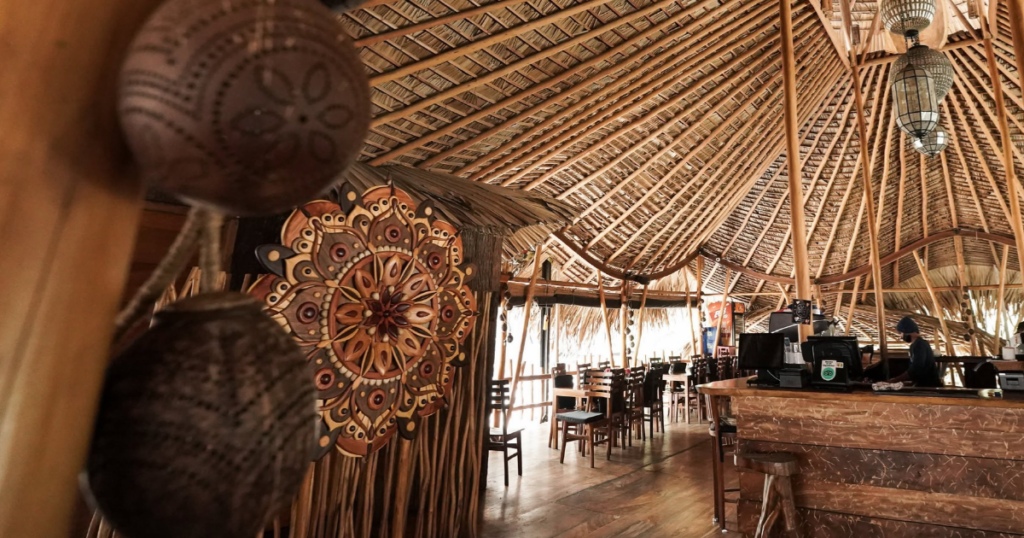
It’s definitely worth reserving a table in advance, especially when travelling with a group, because this is one of Ella’s most popular restaurants. And for good reason.
The menu offers an impressive variety of Sri Lankan and international dishes, making it another excellent choice when our guests fancy a change from the traditional rice and curry they’ve been enjoying along the journey.
But there’s one dish I particularly recommend trying here: lamprais.
Lamprais is one of Sri Lanka’s most fascinating culinary traditions, with roots in the Dutch colonial period and the island’s Dutch Burgher community.
Its name is derived from the Dutch lomprijst, meaning something similar to a parcel of rice. The dish developed through a combination of European, Indonesian and Sri Lankan culinary influences, becoming a distinctive part of the island’s food heritage.
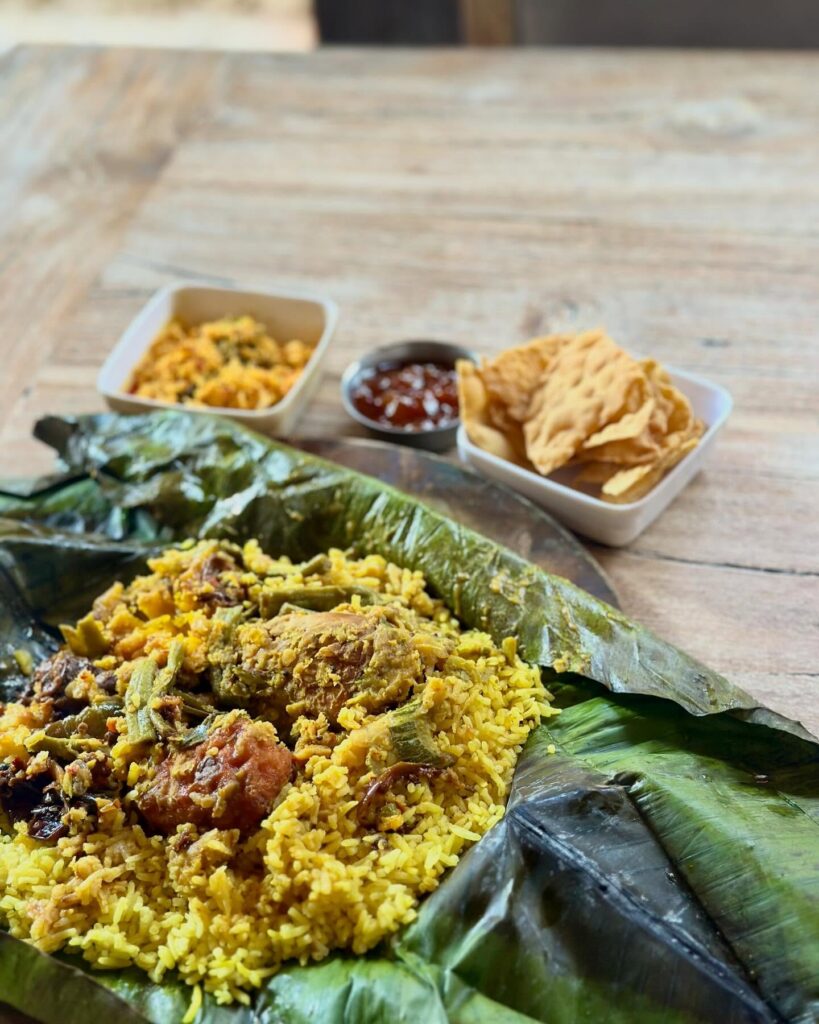
Traditional lamprais consists of rice cooked in a fragrant meat stock, accompanied by a carefully prepared selection of curries and condiments. These may include mixed meat curry, spiced meatballs known as frikkadels, aubergine preparations, caramelised onion sambol and a pungent shrimp relish called blachan.
Everything is wrapped together in a banana leaf and baked, allowing the aromas and flavours to mingle.
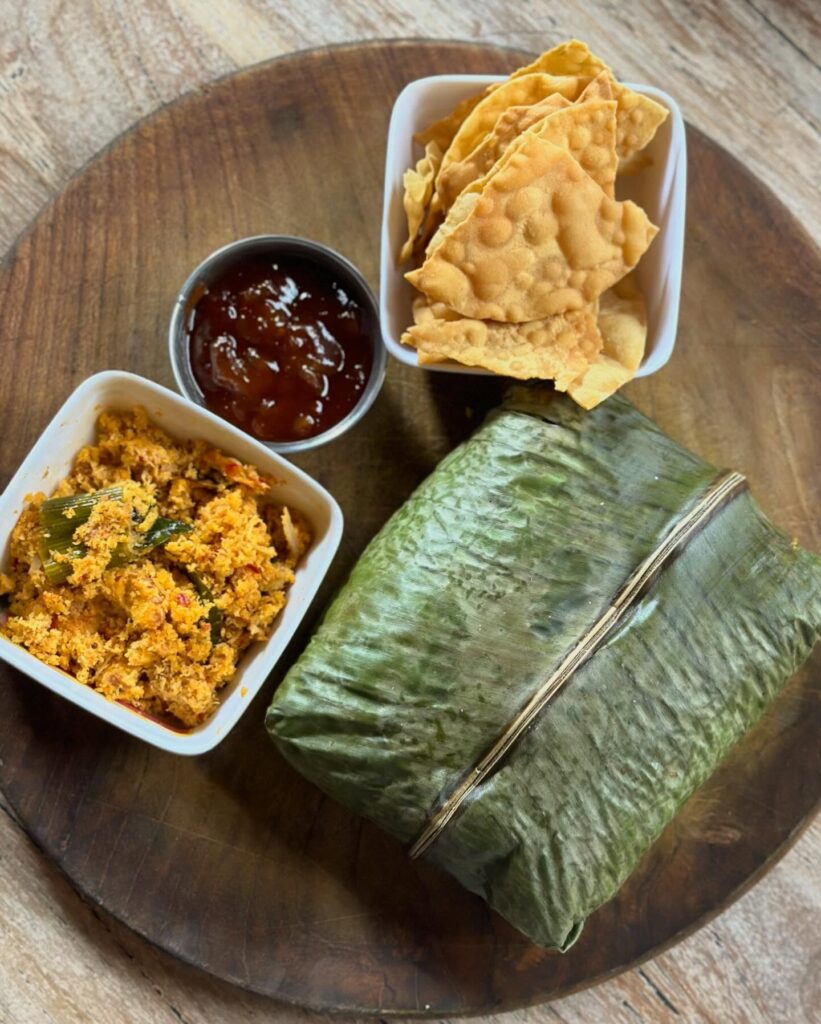
It’s a surprisingly elaborate dish, with several components requiring separate preparation. Perhaps that’s why authentic, traditionally prepared lamprais isn’t something you’ll find in every Sri Lankan restaurant today. Many establishments offer simplified or modern interpretations instead.
At Café Chill, the version includes rice, chicken curry, aubergine and egg wrapped in a banana leaf. It’s not identical to the traditional Dutch Burgher recipe, but it’s a delicious and accessible introduction to this distinctive Sri Lankan speciality.
And there’s something particularly enjoyable about unwrapping the banana leaf at your table, releasing the aroma of the spices before taking your first bite.
Of course, if lamprais doesn’t appeal to you, there are plenty of other options, from burgers and pizzas to pasta, salads and other Sri Lankan favourites.
Indicative cost: Café Chill lists its chicken lamprais at LKR 1,950 (approximately USD 6), with a 10% service charge added. Other dishes vary in price, and it’s worth checking the current menu before visiting.
10. Eva Lanka, Tangalle: A Taste of Naples Overlooking the Indian Ocean
After several days of exploring Sri Lanka’s incredible cuisine, sometimes you just fancy something different. And what better way to enjoy a change of flavours than in a beautiful tropical setting overlooking the Indian Ocean?
Located near Tangalle, on Sri Lanka’s southern coast, Eva Lanka is a charming tropical retreat surrounded by lush vegetation, with beautiful ocean views and a relaxed atmosphere.
For me, Eva Lanka is one of those hidden gems you’d probably never discover if you were simply looking for somewhere to eat. It’s not the kind of place you’d casually stumble upon, but rather somewhere worth knowing about and making a special stop for. And that’s exactly the kind of discovery I love sharing with our guests.
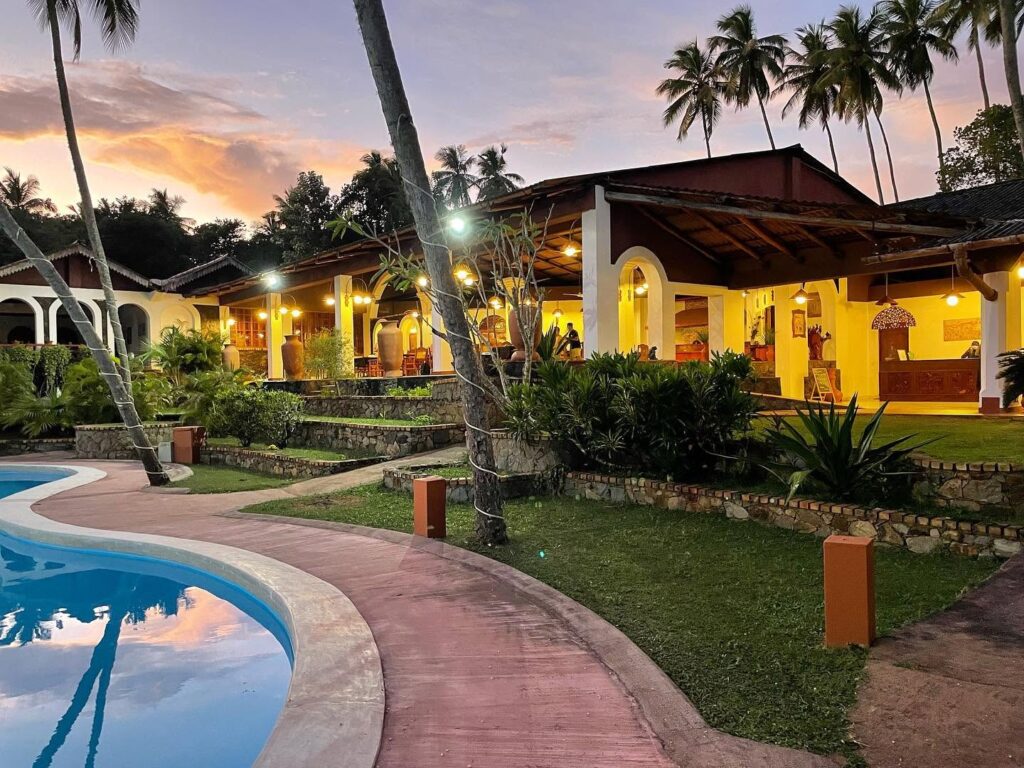
But there’s another reason why we enjoy stopping here: the pizza.
Eva Lanka has partnered with Aqua Pizza, one of the leading names bringing authentic Italian pizza and culinary traditions to Sri Lanka. This collaboration combines Italian pizza-making expertise with a spectacular tropical setting, offering something you might not expect to find during a motorcycle journey around the island.
The pizzas are prepared in the Neapolitan tradition, with carefully made dough, quality ingredients and a wood-fired oven. The Sri Lankan chefs have been trained in Italian pizza-making techniques, producing pizzas that capture the flavours and character of Naples.
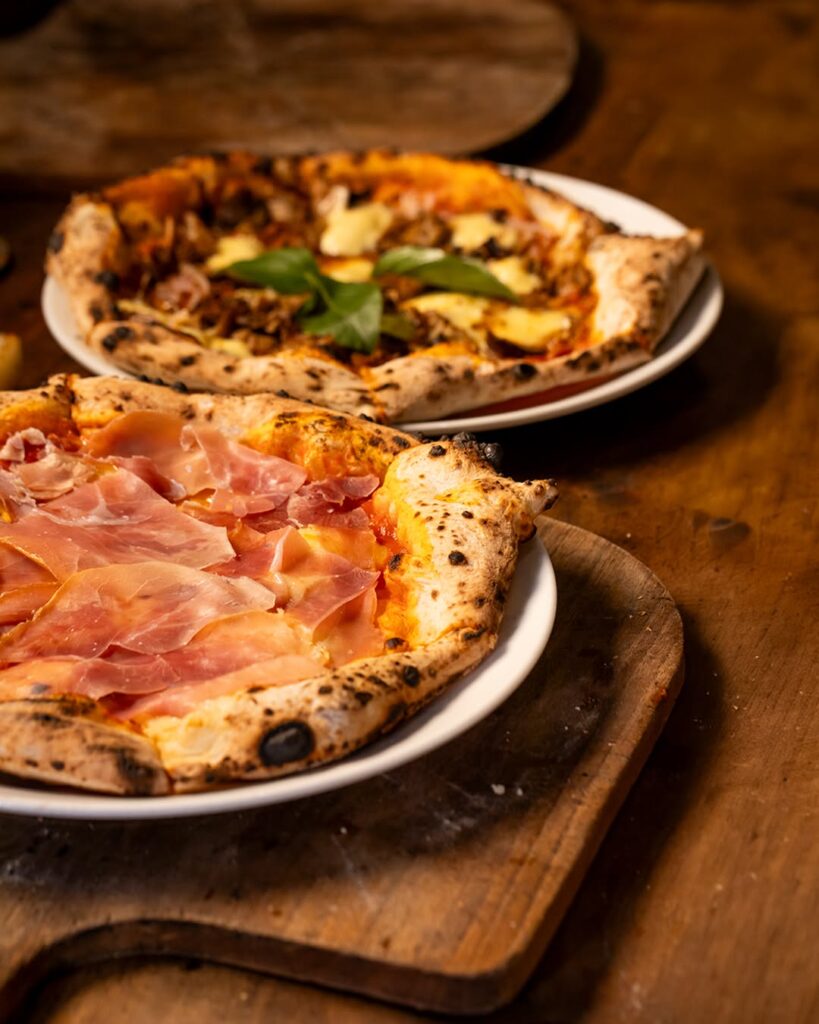
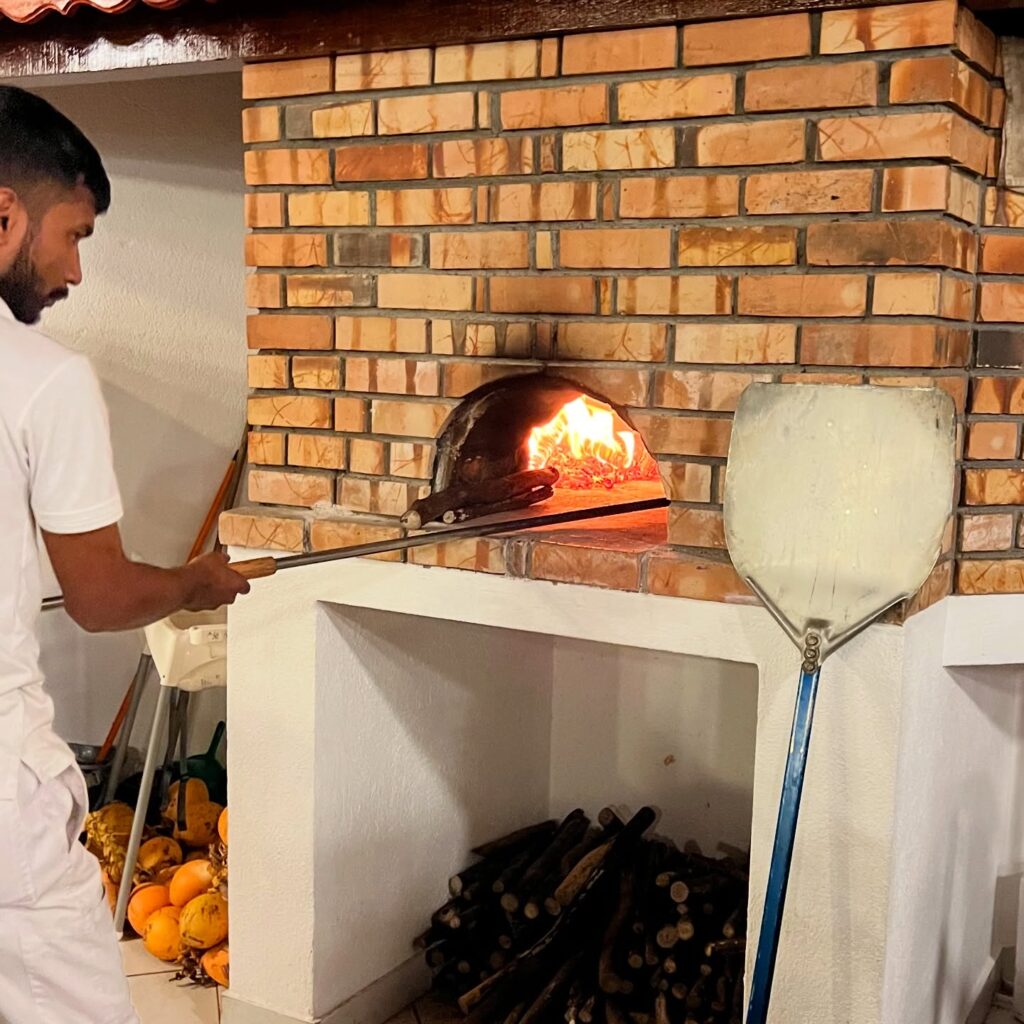
Having grown up in Italy, I’m particularly fussy when it comes to pizza. For me, a good pizza starts with the dough, followed by the right balance of ingredients and proper cooking. Finding one that meets those expectations in a tropical corner of Sri Lanka is always a pleasant surprise.
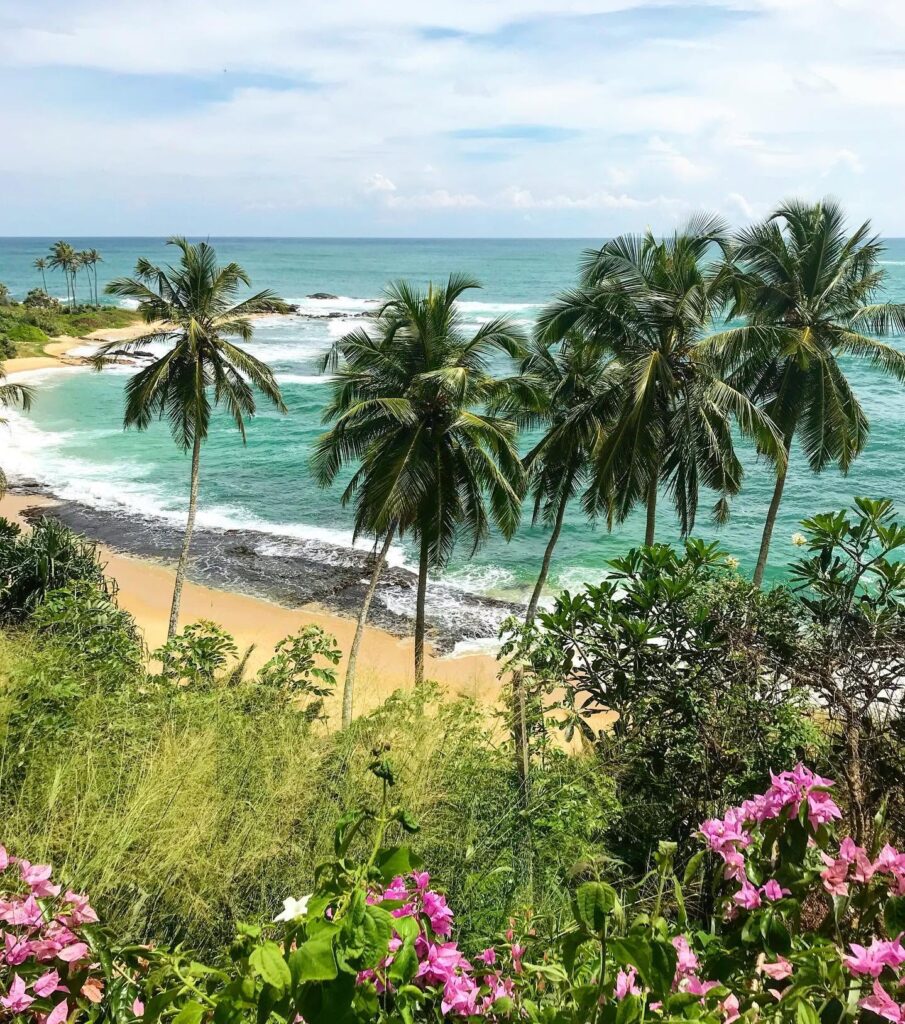
Of course, the setting makes the experience even more memorable. Surrounded by tropical greenery, with the Indian Ocean stretching out before you, it’s a wonderful place to relax, enjoy a good meal and reflect on the day’s ride.
It’s also a perfect example of why we don’t limit our motorcycle tours to traditional Sri Lankan restaurants. Local cuisine is an essential part of the journey, but discovering unexpected culinary experiences along the way adds another dimension to the adventure.
Sometimes, a taste of Italy in the middle of the tropics is exactly what you need.
11. Sounds and Flavours of Sri Lankan Street Food
You can learn a lot about a country through its street food. In Sri Lanka, it’s not just about what people eat, but also where people gather, how food is prepared and the lively atmosphere that surrounds it.
And sometimes, you hear the food before you even see it.
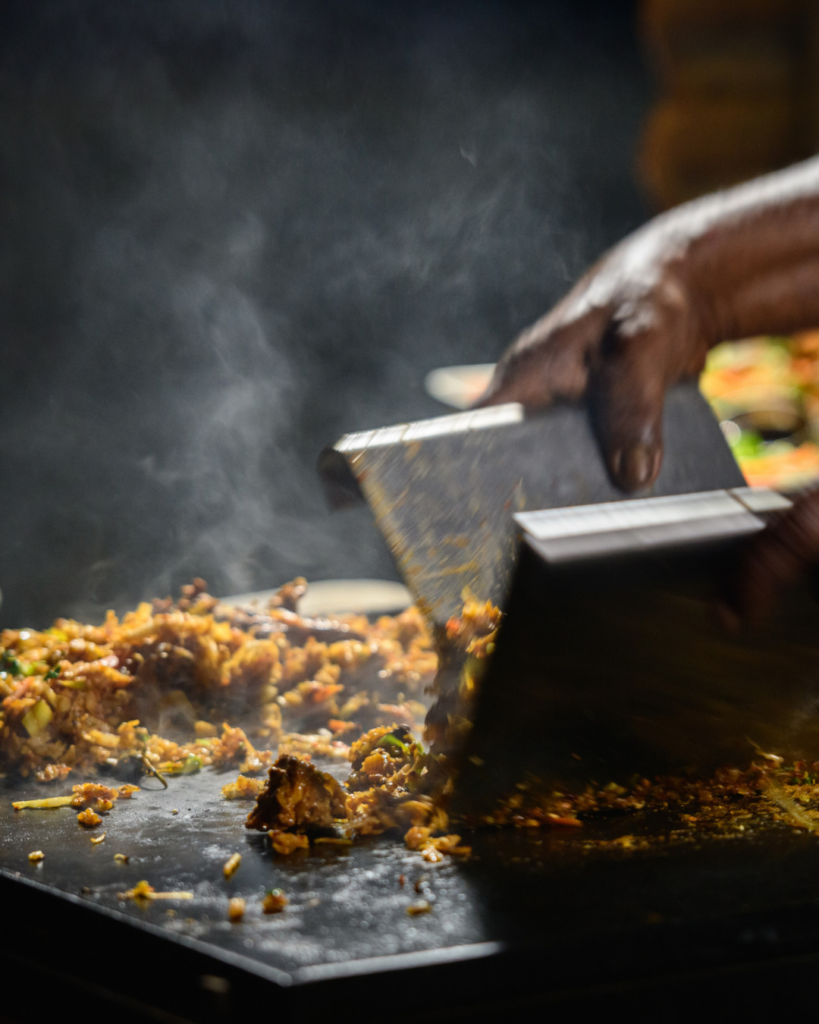
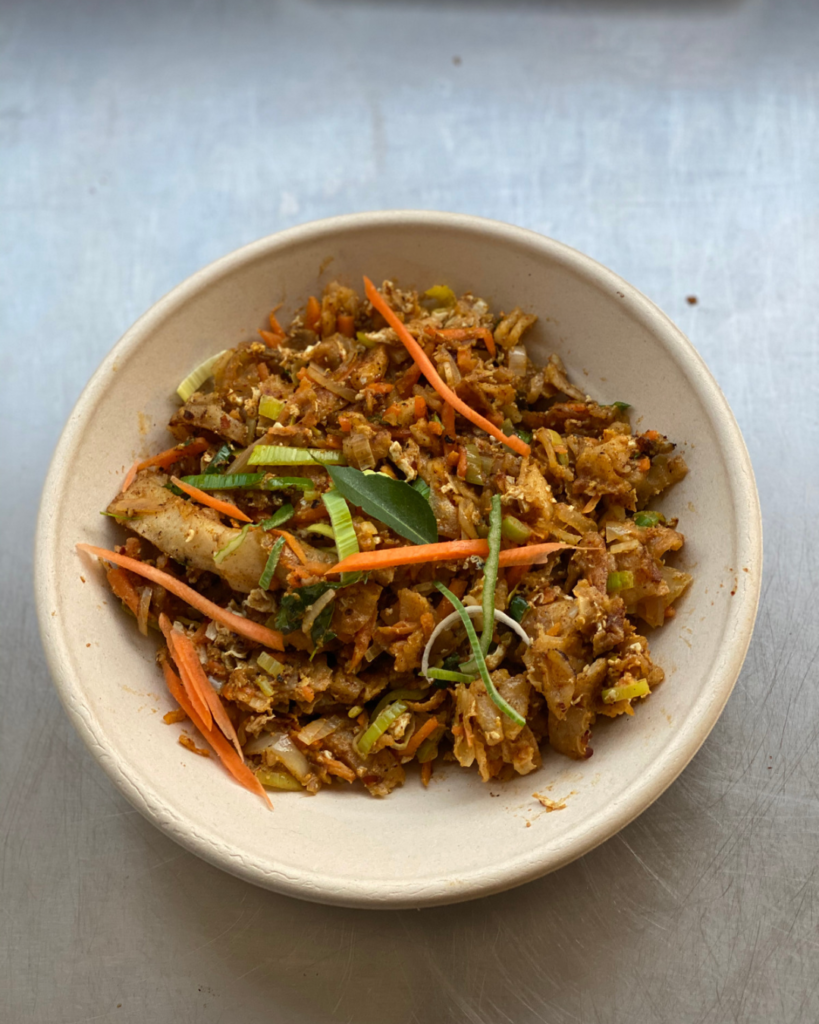
Take kottu roti, for example. Walk through almost any Sri Lankan town in the evening and you’ll probably recognise the distinctive metallic rhythm of two blades striking a hot griddle.
That’s the sound of a cook chopping up pieces of godamba roti, a thin, flaky flatbread, together with vegetables, eggs, spices and, depending on your preference, chicken, beef or seafood. The ingredients are tossed, chopped and mixed at remarkable speed, creating one of Sri Lanka’s most recognisable dishes.
It’s noisy, theatrical and wonderfully chaotic. Watching a skilled kottu chef at work is almost as entertaining as eating the finished dish.
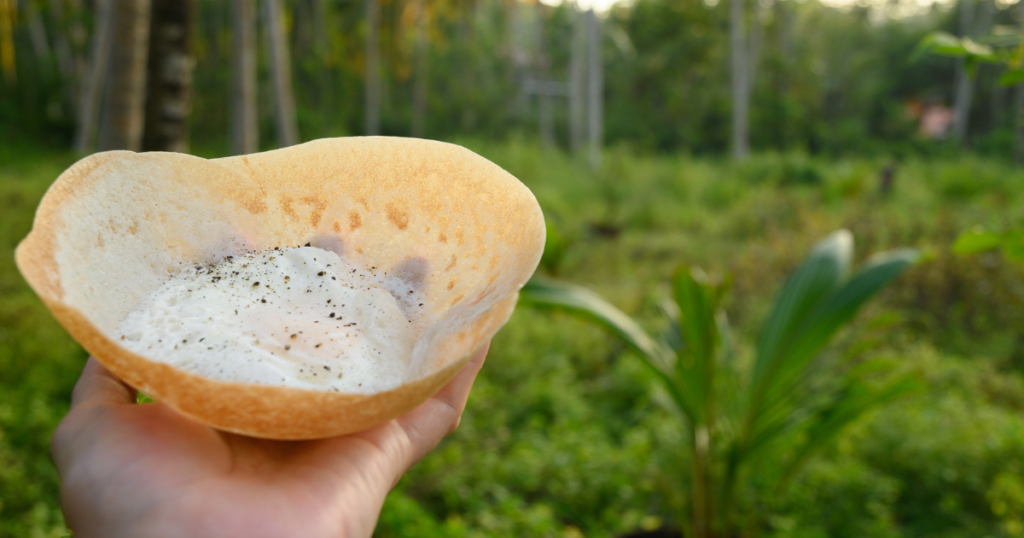
Then there are hoppers, known locally as appa. These delicate, bowl-shaped pancakes are made from a fermented batter of rice flour and coconut milk, cooked in a small rounded pan until the edges become thin and crispy while the centre remains soft.
They’re delicious with a spicy sambol, but my personal favourite is the egg hopper, with an egg cooked right in the middle. A few hoppers with a good chilli sambol make a wonderful breakfast or evening snack.
Another popular street food is vadai, a family of savoury fried snacks that come in several varieties.
Parippu vadai are crunchy fritters made with lentils, onions, chillies and spices. Ulundu vadai, on the other hand, are made from urad dal and have a distinctive doughnut shape, with a crisp exterior and softer centre.
And if you’re travelling along Sri Lanka’s coast, keep an eye out for isso vadai. These crispy lentil fritters are topped with small prawns and are particularly associated with seaside street food stalls. They’re crunchy, spicy and wonderfully addictive.
Then there’s egg roti, a popular variation of the thin, flaky godamba roti, folded around an egg and cooked on a hot griddle. Simple, filling and particularly satisfying when eaten freshly prepared.
For those with a sweet tooth, Sri Lanka has plenty to offer too.
One of the most interesting treats is pani walalu, sometimes called unduwel. These spiral-shaped sweets are fried until golden and soaked in a rich sugar or treacle syrup. They’re sticky, intensely sweet and definitely worth trying at least once.
And of course, there’s watalappan, a rich, steamed custard made with coconut milk, jaggery, eggs and aromatic spices such as cardamom and nutmeg. Although more of a traditional dessert than a typical roadside snack, it’s a wonderful way to finish a Sri Lankan meal.
What makes these foods particularly enjoyable is that you don’t need to plan a special visit to experience them. You’ll encounter street food stalls, small eateries and roadside vendors throughout the country, from busy towns to remote villages.
Sometimes we stop for a quick snack during a ride. Other times, we discover something interesting while walking through a local market or exploring a town in the evening.
Indicative cost: Individual snacks such as vadai or egg roti may cost around LKR 100–400 (USD 0.30–1.30), while a plate of kottu generally costs around LKR 700–2,000 (USD 2–6.50), depending on the ingredients and location.
For me, Sri Lankan street food is about much more than inexpensive meals. It’s about the sounds of the griddle, the aromas drifting through the streets, the conversations with vendors and the pleasure of discovering something delicious when you least expect it.
And those spontaneous moments are often among the most enjoyable parts of a motorcycle journey.
12. Serendib Pub, Negombo: A Seafood Feast to End the Journey
Negombo is often the first or last stop for travellers visiting Sri Lanka. Located close to Bandaranaike International Airport, this lively coastal town has become a popular place to begin or end a holiday, with countless restaurants, cafés, bars and seafood eateries lining the beach road.
With so many options available, choosing where to eat isn’t always easy. But when our motorcycle tours finish in Negombo, there’s one place we particularly enjoy visiting for our farewell dinner: Serendib Pub.
Let’s be clear: this isn’t a fancy restaurant. The place is relatively small, the furnishings are basic, and the overall setting is rather spartan. A little more attention to the décor certainly wouldn’t hurt. But sometimes appearances aren’t everything, and Serendib Pub is a good example of why we prefer judging a restaurant by the overall experience rather than how polished it looks.
For a start, the location is excellent. The restaurant sits directly in front of the sea, and if you arrive around sunset, you can enjoy the beautiful colours of the evening sky from the beach before settling down for dinner.
And then there’s the food.
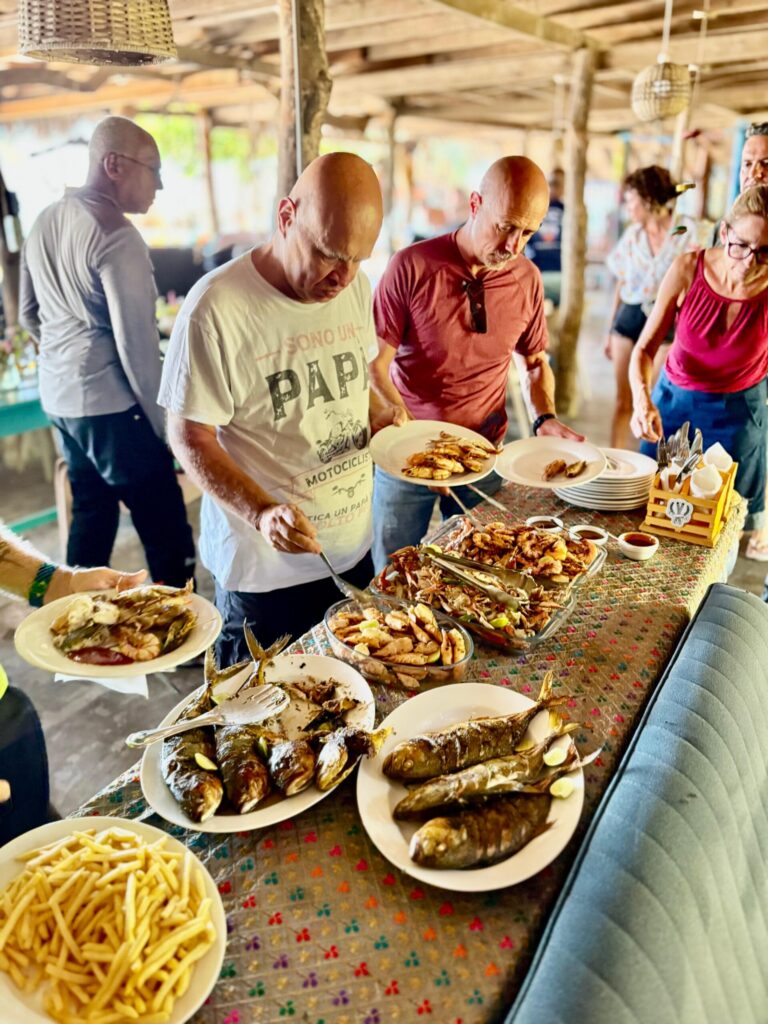
During the peak tourist season, tanks displaying fresh seafood add to the experience. Depending on availability, you might find jumbo prawns, lobsters, crabs and even oysters, giving you an idea of what’s on offer before you order.
For groups, one of the most enjoyable choices is the mixed seafood platter. It’s a generous assortment that can include crab, crayfish, tuna, cuttlefish and whatever else the day’s catch has provided, served with fresh green salad and French fries.
It’s a fantastic dish to place in the middle of the table and share while everyone exchanges stories about the journey.
But my personal favourite is something with a distinctly Sri Lankan touch: mud crab curry.
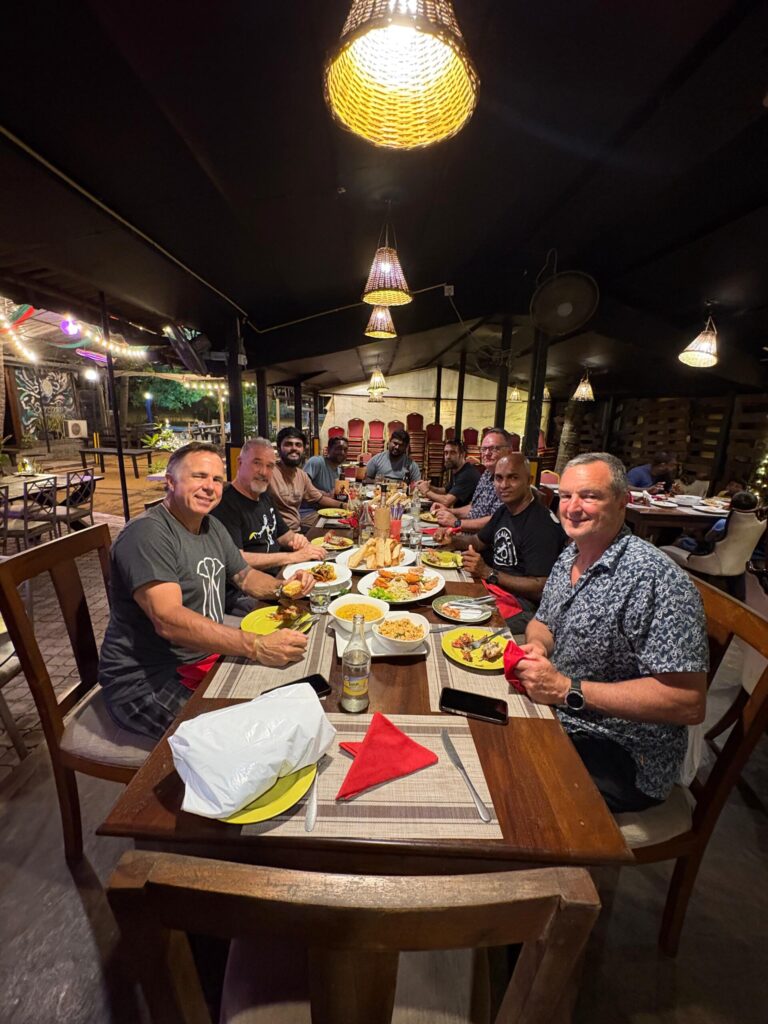
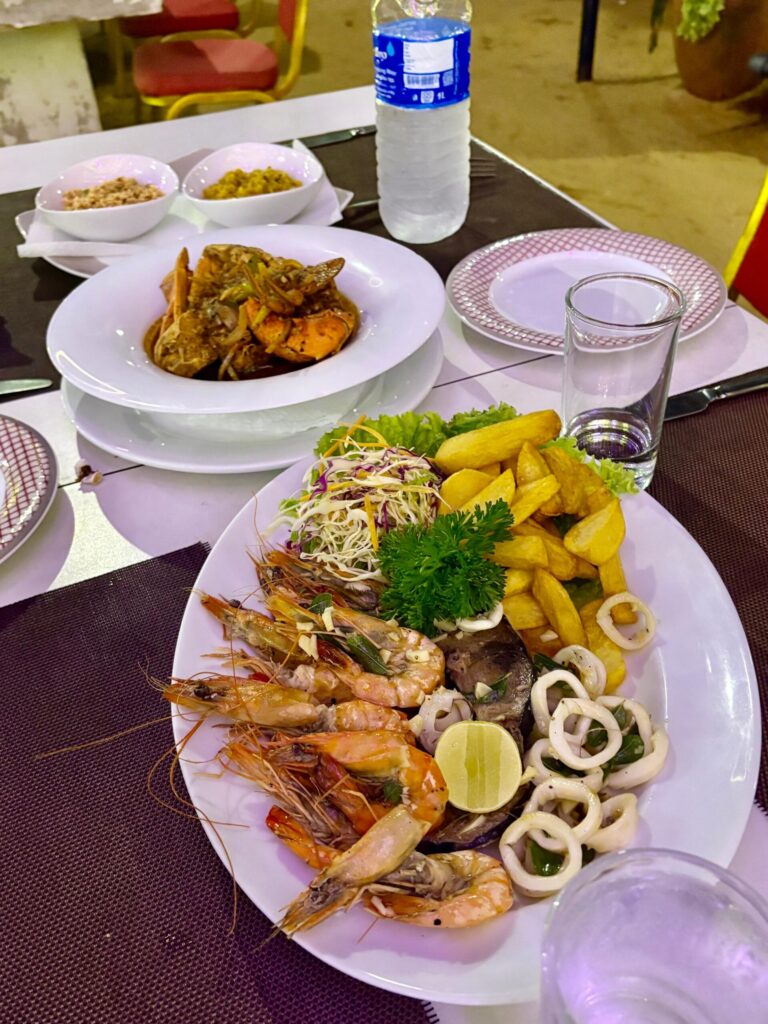
Sri Lankan mud crab is prized for its sweet, delicate meat, and when cooked in a rich, aromatic curry sauce, it becomes something truly special. At Serendib Pub, I particularly enjoy it served with local roast bread, pol sambol and dhal.
It’s not a dish you eat in a hurry. You’ll need to crack the shell, work your way around the claws and occasionally get your hands a little messy. But that’s all part of the experience, and the reward is absolutely worth the effort.
The staff will ask how spicy you’d like your curry, so you can choose a level that suits your taste. And if you need some extra white rice to soak up that delicious sauce, just ask. In our experience, they’re always happy to bring some.
Sometimes, all you need is fresh seafood, a great curry, a beautiful sunset and good company.
Indicative cost: Seafood prices vary considerably depending on the species, size and seasonal availability. Larger crabs, lobsters and mixed platters are generally priced higher than standard main courses, so it’s worth checking the current menu or market price before ordering.
13. The Hotel Buffet: A Little Luxury and Plenty of Choice
After exploring roadside eateries, family-run restaurants, street food stalls and local markets, there’s one more food experience worth mentioning. It’s something you’ll encounter on almost every motorcycle tour in Sri Lanka: the hotel buffet.
When travelling around the island and staying in comfortable three- and four-star hotels, meals are often served as buffets or, in smaller properties, through a selection of set menus.
And while a hotel buffet might not sound particularly adventurous, the variety and quality can be surprisingly impressive.
At some of Sri Lanka’s historic and more prestigious hotels, such as the Grand Hotel in Nuwara Eliya or the Galle Face Hotel in Colombo, the buffet spreads can be extraordinary. You’ll find an incredible selection of dishes representing Sri Lankan, Asian and European cuisines, sometimes with live cooking stations and elaborate dessert counters.
But even at more modest hotels, there’s usually plenty to choose from.
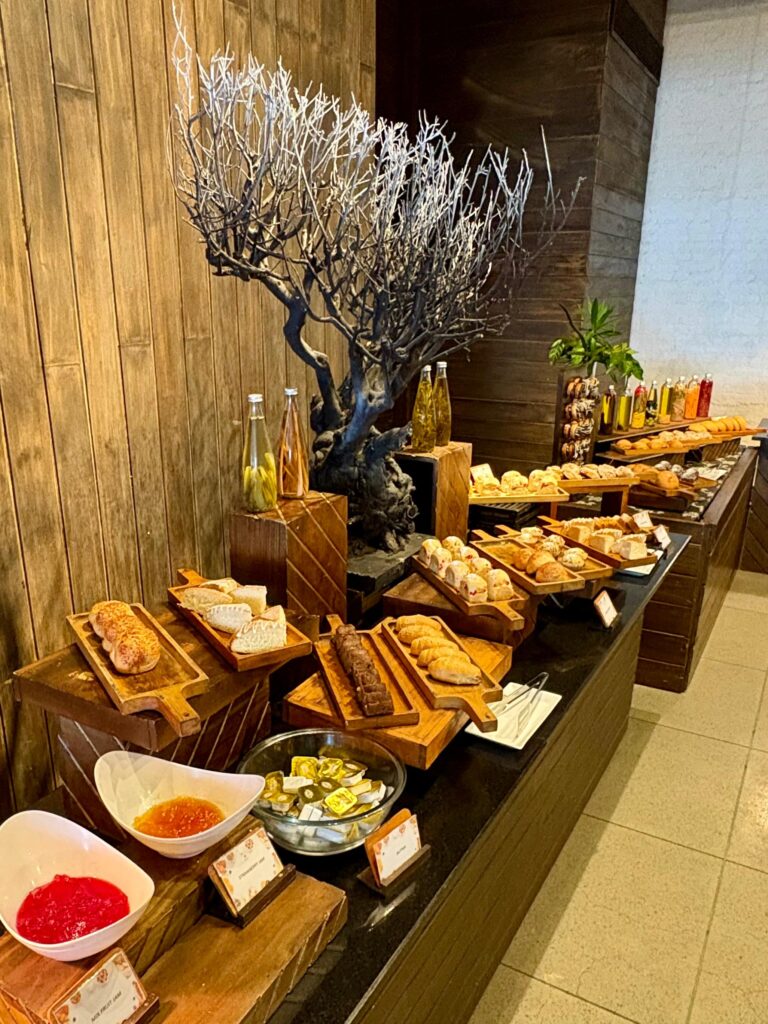
Breakfast is particularly interesting because it brings together two very different approaches to the first meal of the day.
For those who prefer something light and familiar, there’s usually toast, butter, jam, fresh fruit, yoghurt, fruit juices, cakes and pastries.
If you prefer a more substantial breakfast, you’ll often find sausages, baked beans, grilled tomatoes and bacon, although pork bacon isn’t always available, as some hotels cater to guests who avoid pork for religious or dietary reasons.
And then there’s the Sri Lankan selection.
String hoppers, delicate nests of steamed rice-flour noodles, are a popular breakfast dish, often accompanied by dhal, coconut sambol and various curries. Some hotels also serve rice, traditional breads and other local specialities, offering a completely different start to the morning.
One feature you’ll find at many hotel breakfast buffets is the live egg station, where a cook prepares eggs exactly as you like them, whether that’s fried, scrambled, poached or made into an omelette with your choice of ingredients.
Complimentary local tea and coffee are generally available at breakfast, usually served from pots or dispensers. However, if you’re someone who can’t start the day without a proper espresso or cappuccino, these normally need to be ordered separately. Expect to pay from approximately USD 3 upwards, depending on the hotel and your choice of coffee.
Dinner buffets offer a similar combination of local and international flavours.
You might start with a selection of fresh salads, move on to a traditional Sri Lankan curry with rice, try some Asian dishes and finish with pasta, grilled fish or a Western-style main course.
The advantage is that you don’t have to commit to just one dish. You can try small portions of several different specialities, discover something new or simply enjoy a familiar favourite.
And after spending several hours riding through Sri Lanka’s mountains, villages and tropical countryside, having a wide choice of food without needing to leave the hotel can be very appealing.
Conclusions: more than just a motorcycle tour
On our motorcycle tours, we generally enjoy breakfast at the hotel, and in many cases dinner too. But we also deliberately arrange meals outside the hotels at selected points throughout the journey.
There’s a reason for that.
Even the most impressive buffet can become repetitive when you’re travelling for ten or fifteen days. And while hotel restaurants offer comfort, convenience and variety, they don’t always provide the atmosphere or personal connections you find in a small family-run eatery, a lively local restaurant or a roadside food stall.
That’s why we like to mix things up.
One evening might involve an extensive hotel buffet, another a traditional Sri Lankan curry, a seafood feast by the ocean or a relaxed dinner at a favourite restaurant.
For us, a great motorcycle holiday is about balance. Authentic experiences and local discoveries are essential, but so are comfort, relaxation and the freedom to enjoy whatever food you’re in the mood for.
And sometimes, after a long day on the road, a hot shower, a comfortable hotel and a generous buffet are exactly what you need.

Simone Loganathan
Founder @ Ride On Sri Lanka
Chat with us
Click to chat on whatsapp
Latest Articles
-
13 Sri Lanka Food Experiences on a Motorcycle Tour
-
Temples, Tea Country & Ocean Breeze
-
Motorcycle Holiday Guide: Choosing the Right Type of Motorcycle Tour
-
Introducing the "2027 First Riders" Offer
-
Best Motorcycle Routes in Sri Lanka
-
What is the Cultural Triangle?
-
Motorcycle Rental in Sri Lanka
-
The Ultimate Guide to Travel in Sri Lanka by Motorcycle
-
Understanding Sri Lanka’s Weather: A Guide for Riders
-
A Motorcyclist’s Paradise: Sri Lanka
