
How Much Does a Motorcycle Tour in Sri Lanka Really Cost?
Written on 31/10/2026
A practical guide to motorcycle touring prices, from independent rentals to fully supported motorcycle holidays.
Planning a motorcycle tour in Sri Lanka? One of the first questions you’ll probably ask is: how much is it going to cost?
The answer depends on how you choose to travel. You could rent a Royal Enfield, book your own accommodation and explore independently, or join a fully supported motorcycle tour with experienced guides, a mechanic and a support vehicle. Both can be fantastic ways to discover the island, but the costs — and the experiences — can be quite different.
Even among organised tours, prices can vary considerably. Two itineraries covering similar distances and destinations might have very different price tags, depending on the motorcycles, accommodation, meals, support services and activities included.
Having spent nearly a decade organising motorcycle tours in Sri Lanka, I’ve learned that the advertised price rarely tells the whole story. Some expenses are obvious, while others are easily overlooked when planning a trip.
In this guide, we’ll break down the real cost of motorcycle touring in Sri Lanka, from bike rentals and hotels to food, fuel, wildlife safaris and local support. We’ll also compare independent travel with fully guided tours, using practical examples and indicative prices to help you understand what to budget for your own adventure.
Table of Contents
How Much Does a Guided Motorcycle Tour in Sri Lanka Cost?
As a general guide, a multi-day guided motorcycle tour in Sri Lanka can cost anywhere from around US$1,500 to more than US$5,000 per rider, depending on the duration, accommodation, motorcycle, level of support and included services.
For example, some shorter or more basic guided tours are advertised around US$1,800–2,500, while established international operators offer longer, fully supported journeys in the US$4,000–5,000 range.
Premium tours with carefully selected accommodation, smaller groups and more comprehensive services may cost more.
These are broad market indications rather than fixed industry price bands. It’s important to compare the actual itinerary and inclusions before deciding whether one tour represents better value than another.
And remember: a 10-day tour isn’t necessarily cheaper to operate on a daily basis than a 14-day tour. The route, number of overnight stops, hotel choices and support arrangements all influence the final price.
Is Sri Lanka More Expensive Than Other Asian Destinations?
Although Sri Lanka is often perceived as an affordable Asian destination, travelling here can be surprisingly expensive compared with countries such as India, Thailand or Vietnam, particularly when it comes to motorcycle rentals, quality accommodation and tourist-oriented restaurants.
High motorcycle import duties, a relatively small rental market, operating costs and the limited availability of certain services all contribute to higher prices. However, local food, public transport and many everyday experiences remain relatively affordable.
This distinction is worth keeping in mind when comparing motorcycle tours across different Asian destinations, especially when evaluating similar standards of accommodation, motorcycles and support services.
What Are You Actually Paying For?
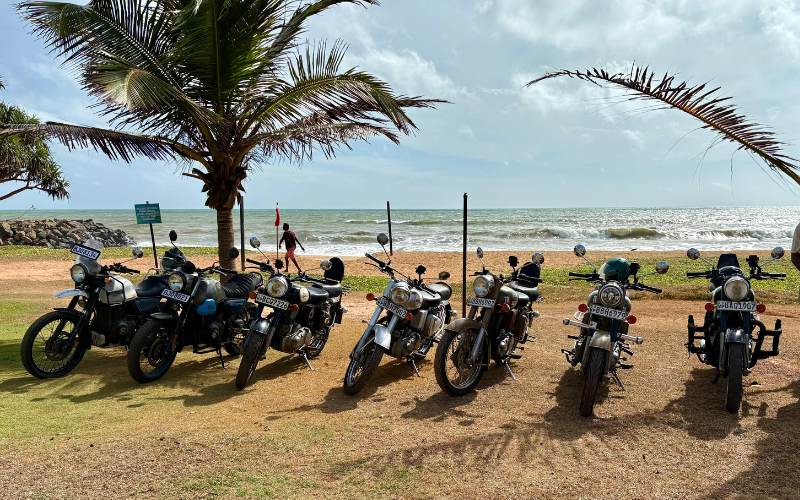
1. The Motorcycle
Motorcycles are naturally one of the main expenses of an organised tour, but their cost goes well beyond the daily rental rate.
In Sri Lanka, some of the most commonly used motorcycles for touring include the Royal Enfield Classic 350 and Himalayan 410/450, alongside models such as the Honda CRF 250 Rally, Honda XR 250, Honda Baja 250, Suzuki V-Strom 250 and Hero Xpulse 200. More recently, motorcycles such as the KTM 390 Adventure have also started entering the touring market.
Smaller motorcycles, including the Bajaj Pulsar, Yamaha FZ and various scooters, are available at considerably lower rental rates. However, these generally cater to a different type of traveller, particularly those looking for affordable transportation rather than a dedicated touring motorcycle.
Renting a Royal Enfield Classic 350 independently typically costs around US$35–45 per day, depending on the motorcycle’s age, rental duration and included services. For a 12-day journey, that’s approximately US$420–540 for the motorcycle alone.
If you’re considering travelling independently, our guide to motorcycle and scooter rentals in Sri Lanka explains the different types of motorcycles available and what to consider before renting.
Why Are Motorcycles Relatively Expensive in Sri Lanka?
Motorcycles in Sri Lanka are generally more expensive to purchase than in neighbouring countries, largely because of high import duties and taxes, a smaller market and the limited availability of certain models.
For several years, vehicle imports were heavily restricted as Sri Lanka struggled with foreign currency shortages and its economic crisis. Introduced in 2020, these restrictions were progressively eased, with vehicle imports resuming in 2025.
This has allowed new motorcycle models to enter the market again, although rebuilding the selection of touring motorcycles will take time.
At Ride On Motorcycle Tours, for example, we’ve begun adding KTM 390 Adventures to our fleet and are exploring other models as they become available.
Spare parts remain another challenge. Because many touring motorcycles are relatively uncommon in Sri Lanka, replacement components aren’t always readily available locally. We frequently have to source parts from India or arrange international shipments, increasing both maintenance costs and the time needed to keep motorcycles in good condition.
Insurance: An Often Overlooked Expense
Another significant expense is motorcycle insurance.
Not every motorcycle rental or guided tour includes comprehensive insurance covering damage to the motorcycle and third-party liability. Even when insurance is advertised as full coverage, the actual protection, excess and exclusions can vary considerably.
Comprehensive insurance can be relatively expensive in Sri Lanka, with premiums depending on the motorcycle’s brand, model, value and year of manufacture.
To give you a real example from our own fleet, insuring one of our 2025 Royal Enfield Classic 350 motorcycles costs approximately US$500 per year.
For some of our older motorcycles, we arrange insurance for the duration of each rental or tour instead. On a Royal Enfield Classic 350 manufactured between 2016 and 2019, for example, this costs approximately US$8 per day.
Over a 12-day tour, that’s approximately US$96 in insurance costs alone.
These are actual examples of our operating expenses rather than standard insurance rates across the industry. They illustrate why two seemingly identical motorcycles can have different rental costs.
Before renting a motorcycle or booking a tour, it’s worth checking exactly what the insurance covers, whether there’s an excess payable in the event of damage, and whether any exclusions apply to the roads you intend to ride.
Fuel and availability in Sri Lanka
Fuel is another expense to consider when planning a motorcycle tour in Sri Lanka. Although motorcycles such as the Royal Enfield Classic 350 are relatively economical to run, fuel costs depend on the distance travelled, riding conditions and prevailing petrol prices.
Sri Lanka relies heavily on imported petroleum products, making domestic fuel prices particularly sensitive to fluctuations in international energy markets. Global conflicts, including those in Ukraine and the Middle East, have contributed to price volatility in recent years.
Fuel availability can also become an issue during periods of supply disruption. Sri Lanka has introduced rationing measures on several occasions, including a QR-code system that limits fuel purchases according to vehicle quotas.
To help maintain tourism services during such periods, the Sri Lanka Tourism Development Authority (SLTDA) provides a dedicated fuel allocation facility for eligible registered tourism operators, subject to approval and verification of their itineraries.
For independent travellers, it’s worth checking the latest fuel regulations before departure, particularly if planning a long-distance motorcycle journey.
For tour operators, both fuel prices and potential supply restrictions need to be considered when planning itineraries and setting prices months in advance.
When comparing motorcycle tour prices, don’t look only at the model of motorcycle provided.
Consider its age and condition, the type of insurance included, whether fuel is covered, and what assistance is available if something goes wrong.
A well-maintained motorcycle, appropriate insurance and reliable mechanical support can make a significant difference to both your enjoyment and peace of mind.
Our advice: Always check which motorcycle is included in the advertised price, whether alternatives are available, what the insurance actually covers, and whether fuel and mechanical assistance are included.
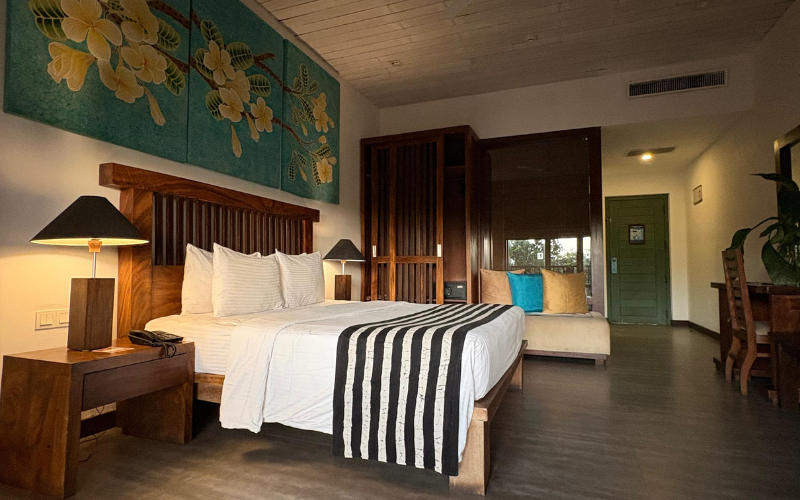
2. Accommodation: From Guesthouses to Boutique Hotels
Accommodation is one of the biggest factors influencing motorcycle tour prices.
Sri Lanka offers everything from simple family-run guesthouses to exceptional boutique hotels, colonial properties and luxury resorts.
Indicative nightly room rates might look like this:
| Accommodation type | Approximate nightly rate |
|---|---|
| Budget guesthouse | US$20–40 |
| Comfortable 3-star hotel | US$45–80 |
| Quality 4-star hotel | US$90–160 |
| Boutique or luxury hotel | US$180–350+ |
These are illustrative rates per room, generally for two people sharing, rather than guaranteed quotations. Prices can vary considerably depending on the season, destination, property and meal plan.
Over a 12-day journey, the difference between budget and premium accommodation can easily exceed US$1,000 per room.
However, price and star rating don’t always tell the whole story. A well-run family guesthouse or a small boutique hotel can sometimes offer a more enjoyable experience than a larger, more expensive property.
After several hours on a motorcycle, a comfortable room, a good restaurant, a swimming pool or a relaxing spa can make a tremendous difference.
Location matters too. A hotel overlooking the mountains or situated within walking distance of a historic town may offer a much more memorable experience than a cheaper property beside a busy main road.
For us, accommodation isn’t merely somewhere to sleep. It’s part of the holiday.
How Seasons Affect Accommodation Prices in Sri Lanka
Another important factor influencing accommodation costs is seasonality, which varies considerably across Sri Lanka.
Unlike destinations with a single peak tourist season, Sri Lanka has different weather patterns across the island. Hotel prices can therefore fluctuate significantly depending on the region, time of year and demand from international and domestic travellers.
Central Highlands, West and South Coasts
In the Central Highlands and along the west and south coasts, accommodation prices generally increase from late December through April, coinciding with the main tourist season.
The most expensive period is often between Christmas and early March, particularly in popular coastal destinations. Prices then tend to ease through March and April as the season draws to a close.
Interestingly, the south coast can experience a second increase in July and August. Although these months fall outside the traditional dry season, they coincide with summer holidays in Europe and winter holidays in Australia and New Zealand, generating additional demand.
East Coast
The east coast follows a different pattern, with its main tourist season running approximately from April to September.
However, July and August can be exceptionally expensive, with some properties charging rates comparable to those of luxury hotels elsewhere on the island.
There are several reasons for this. The east coast has a shorter period of concentrated tourist demand, and destinations such as Nilaveli, Uppuveli and Pasikudah have a more limited selection of quality accommodation compared with the more developed tourist areas of the south and west.
As a result, demand can exceed the availability of desirable rooms during the busiest weeks, pushing prices considerably higher.
What Does This Mean for Motorcycle Tours?
For a motorcycle tour covering several regions of Sri Lanka, seasonal hotel pricing can make a substantial difference to the overall cost.
An itinerary travelling through the Central Highlands and south coast in February, for example, may have significantly higher accommodation costs than a similar journey during the shoulder season. Likewise, a tour including several nights on the east coast in August can be surprisingly expensive.
This helps explain why two motorcycle tours with similar itineraries and accommodation standards may have different prices depending on their departure dates.
3. Guides, Mechanics and Support Vehicles: The Value of Local Knowledge
One of the biggest differences between travelling independently and joining a fully supported motorcycle tour is something that’s difficult to put a price on: local knowledge.
The beauty of exploring a country by motorcycle is the freedom to venture off the beaten path, discover remote villages, ride through beautiful countryside and experience places that many visitors never see.
Sri Lanka has an extraordinary network of secondary roads, narrow mountain passes and rural tracks winding through tea plantations, paddy fields and forests. Some of the most memorable roads are barely wide enough for a motorcycle, and certain routes don’t even appear on Google Maps.
We occasionally receive motorcycle rental requests from travellers who want to explore independently, and we’re always happy to help with route suggestions. However, there are limits to what we can explain on a map. Some of our favourite roads are virtually impossible to describe with turn-by-turn instructions, simply because there are no road names, signs or recognisable landmarks.
This is where an experienced Road Captain with genuine local knowledge can make a real difference, helping riders discover lesser-known routes and experiences that might otherwise be easy to miss.
Mechanical support & Roadside assistance
Of course, venturing off the beaten path can also present challenges.
Imagine riding through a remote area, miles from the nearest town, when your motorcycle suddenly develops a mechanical problem. Perhaps you’ve suffered a puncture, broken a clutch cable or experienced an electrical fault.
Finding assistance isn’t always straightforward, particularly in areas with limited mobile phone reception or where local workshops may not have the necessary equipment or replacement parts.
What began as a fantastic day of riding could quickly turn into several hours of unexpected delays.
This is where having a dedicated mechanic who knows the motorcycles, together with a support vehicle carrying tools and spare parts, becomes particularly valuable.
Many common mechanical problems can be resolved on the roadside, allowing the journey to continue with minimal disruption.
Even if you manage to reach a nearby town and find a local mechanic, there’s no guarantee they’ll have the parts you need. As mentioned earlier, many touring motorcycles are relatively uncommon in Sri Lanka, and certain components may need to be sourced from India or other countries.
Having experienced mechanical support available throughout the journey can turn what might otherwise be a major disruption into a relatively minor inconvenience.
The Role of the Support Vehicle
The support vehicle plays several other important roles throughout the journey.
It carries guests’ luggage, spare parts, tools, drinking water, refreshments, snacks and other essentials, allowing riders to enjoy the roads without loading their motorcycles with heavy bags.
The support vehicle also provides an alternative for pillion passengers who may prefer to take a break from riding or travel in greater comfort for part of the day. Our vehicles generally have an additional row of seats accommodating up to three passengers, although two can travel more comfortably. This flexibility can be particularly appreciated during longer riding days.
And while we naturally hope that nobody ever gets injured, having a support team equipped with first-aid supplies can be particularly valuable in remote areas.
Minor injuries can receive initial attention, while someone requiring medical assistance can be transported to an appropriate medical facility when it is safe to do so. In more serious emergencies, the team can help coordinate professional medical assistance and emergency transport.
Providing this level of support requires careful planning, reliable vehicles, appropriate equipment and experienced personnel.
Looking After the People Who Look After You
There’s another aspect of running a professional motorcycle tour that travellers rarely see: the welfare of the support team.
A fully supported tour requires several people working together, often including a Road Captain, Tour Leader, mechanic and support vehicle driver.
These are long and demanding working days. The team may spend several weeks away from their families, dealing with everything from route coordination and motorcycle maintenance to luggage, hotel arrangements and unexpected situations.
Many hotels in Sri Lanka offer complimentary accommodation and meals for drivers and guides. However, these facilities can sometimes be extremely basic, with staff expected to sleep in shared dormitories offering little comfort or privacy.
At Ride On, when these facilities don’t meet reasonable standards, we prefer to pay for proper rooms rather than expect our team to accept inadequate accommodation simply because it’s free. We also ensure they have access to good meals rather than being restricted to whatever is provided for visiting crews.
After a long day on the road, our team deserves a comfortable bed, a good night’s sleep and the privacy to relax or call their families back home.
We also believe in paying our staff fairly and treating them with the same respect and consideration we extend to our guests.
Ultimately, taking good care of our guests begins with taking good care of the people who look after them.
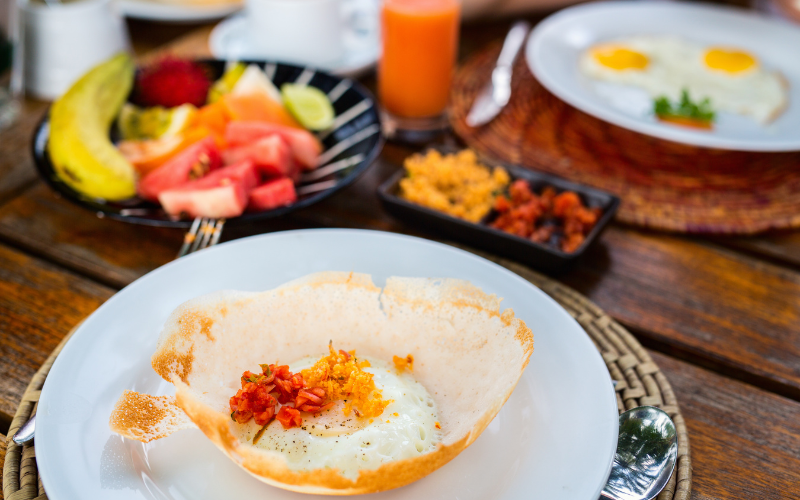
4. Meals and Drinks: More Than Just Fuel for the Journey
Food is another important factor influencing the price of a motorcycle tour, and one where the differences between operators can be surprisingly significant.
Some tours include breakfast only, leaving participants to arrange and pay for lunch and dinner themselves. Others offer half-board accommodation, while more comprehensive packages include most meals, snacks and refreshments throughout the journey.
But there’s something we believe is often overlooked when comparing motorcycle holidays: food shouldn’t simply be treated as another operating expense. It should be part of the experience.
Having grown up in Italy, I’ve always considered good food an essential part of travelling. A meal isn’t just something you squeeze into the day because you’re hungry. It’s something to look forward to, enjoy and share with good company.
And Sri Lanka is a particularly rewarding destination for anyone who enjoys discovering a country through its cuisine. From small roadside bakeries and traditional rice-and-curry restaurants to fresh seafood and unexpected culinary discoveries, there are countless opportunities to make food an enjoyable part of the journey.
After all, when you have only one or two weeks to explore a country, why not make the meals as memorable as the roads?
How Much Does Food Cost in Sri Lanka?
Sri Lanka offers an enormous variety of dining experiences, from inexpensive roadside eateries to excellent international restaurants and luxury hotel dining.
As a general indication, here’s what you might expect to spend:
| Dining experience | Approximate cost per person |
|---|---|
| Local rice and curry or roadside eatery | US$2–5 |
| Simple local restaurant | US$5–10 |
| Mid-range restaurant | US$10–20 |
| Quality hotel restaurant or buffet | US$20–35+ |
These are indicative prices per person for a meal, generally excluding alcoholic beverages. Costs vary depending on the location, restaurant and what you order. Imported products and certain seafood dishes can increase the bill considerably.
For a 12-day motorcycle holiday, someone paying independently for lunch and dinner could easily spend US$200–400 or more, depending on their dining preferences.
When comparing motorcycle tours, it’s therefore worth checking whether the package includes breakfast only, half-board or most meals throughout the journey.
However, the cost of the meal alone doesn’t tell the whole story.
Authentic Food Experiences Don't Have to Be Expensive
Some of the best food experiences in Sri Lanka are also among the least expensive.
Take the traditional Pol Athu Kade, a rustic roadside restaurant where an extraordinary selection of freshly prepared curries is often served in clay pots. A generous meal might cost only a few dollars, yet the flavours, variety and atmosphere can rival those of much more expensive establishments.
Or imagine stopping at a tiny bakery in the middle of the countryside, enjoying freshly baked fish buns and a cup of sweet Sri Lankan milk tea while chatting with the locals.
These are the kinds of experiences that make motorcycle touring so special.
At Ride On, we enjoy discovering restaurants and food experiences worth sharing with our guests. Sometimes that means stopping at a simple family-run eatery. Other times, it means visiting somewhere like Jaga Food near Polonnaruwa, where guests can discover an extraordinary variety of traditional curries while learning about the ingredients and cooking techniques.
One of our favourite experiences takes place on the northeast coast. Rather than simply ordering seafood from a restaurant menu, we visit the wholesale fish market in Trincomalee, select the day’s fresh catch and arrange for it to be prepared back at our hotel or a local restaurant.
On one occasion, we spent approximately US$5–6 per person on fresh seafood, plus the cost of preparation and a tip for the kitchen staff.
It’s a wonderful example of how a memorable culinary experience doesn’t necessarily have to be expensive.
Variety is Part of the Experience
Of course, we don’t believe that every meal on a Sri Lankan motorcycle tour should consist of rice and curry.
Sri Lankan cuisine is wonderfully diverse, but after several days of traditional food, some guests understandably fancy something different.
That’s why we also enjoy introducing our groups to quality international restaurants.
In Kandy, for example, we regularly visit Slightly Chilled, where guests can choose from Chinese dishes, homemade noodles and familiar Western favourites.
In Ella, Café Chill offers everything from traditional Sri Lankan lamprais to burgers, pasta and other international dishes.
And on the southern coast, we’ve even found an excellent Neapolitan-style pizza at Eva Lanka, overlooking the Indian Ocean.
For us, the objective isn’t to insist that guests eat local food at every opportunity. It’s to offer quality, variety and memorable experiences, whether that means a homemade curry in a rural village or a delicious pizza after a day in the saddle.
The Hidden Costs of a Good Food Experience
Finding a good restaurant is one thing. Finding one that fits naturally into a motorcycle tour is another.
When developing our itineraries, we spend time exploring different routes, visiting restaurants and trying their food. A small family-run eatery might serve exceptional dishes but struggle to accommodate a group, while another might have excellent facilities but lack the atmosphere or quality we’re looking for.
Beyond the food itself, we consider hygiene standards, service times, dietary requirements, parking facilities and whether the restaurant can comfortably accommodate our riders.
Location matters too. A fantastic restaurant isn’t particularly useful if reaching it requires a lengthy detour or means arriving at the hotel after dark.
Some of our favourite experiences, such as purchasing fresh seafood at a local market and arranging for it to be prepared nearby, also depend on relationships with local people and a little advance coordination.
And even after finding somewhere we love, we continue exploring. Restaurants change, chefs move on and new discoveries are always waiting around the next bend.
The best food stops often feel spontaneous, even when considerable thought has gone into choosing them.
Drinks, Snacks and Refreshments
Another detail worth checking when comparing motorcycle tour packages is whether drinks and refreshments are included.
Sri Lanka’s tropical climate makes regular hydration particularly important, especially when riding through the warmer lowlands.
On our tours, we carry drinking water, soft drinks and snacks in the support vehicle, allowing guests to enjoy refreshments during regular breaks without worrying about finding a shop or paying for every bottle of water.
We also enjoy spontaneous stops at roadside fruit stalls, where a freshly opened king coconut, juicy pineapple or seasonal tropical fruit can be exactly what you need after an hour on the motorcycle.
These little stops are part of the pleasure of exploring Sri Lanka by motorcycle, offering opportunities to discover local produce, meet people and take a break from riding.
Individually, drinks and snacks may seem like minor expenses, but they’re worth considering when comparing what’s included in different tour packages.
When comparing motorcycle tour prices, check which meals are included, whether drinks and snacks are provided during the riding day, and whether special dietary requirements can be accommodated.
But don’t judge a tour’s food arrangements simply by the number of included meals. Consider the quality, variety and type of dining experiences offered, from traditional local restaurants to international cuisine.
It’s also worth checking whether the itinerary leaves enough time to enjoy the food and the places you visit, rather than treating every meal as a quick stop between destinations.
A great motorcycle holiday isn’t just about the roads you ride. It’s also about the people you meet, the places you discover and the meals you share along the way.
5. Cultural Attractions, Wildlife Safaris and Activities
One of the things that makes Sri Lanka such an extraordinary motorcycle touring destination is the sheer variety of experiences available within a relatively small country.
In a single journey, you can explore ancient cities dating back more than two thousand years, climb a spectacular rock fortress, visit Buddhist temples, encounter wild elephants, discover traditional villages, snorkel among tropical fish or simply relax on a beautiful beach.
At Ride On, we’ve always believed that a motorcycle holiday should be about much more than riding from one hotel to another. The roads are an essential part of the adventure, but so are the places we discover and the experiences we enjoy along the way.
However, many of Sri Lanka’s major attractions charge entrance fees, particularly for international visitors, and these expenses can add up surprisingly quickly.
How Much Do Cultural Attractions Cost in Sri Lanka?
Sri Lanka has eight UNESCO World Heritage Sites, alongside countless temples, archaeological monuments, museums and other places of historical interest.
Some are free to visit, while others charge international visitors considerably more than local residents.
The following table provides an indication of what foreign adult visitors can expect to pay.
| Cultural attraction | Approximate entrance fee (USD) |
|---|---|
| Sigiriya Rock Fortress | $35 |
| Ancient City of Polonnaruwa | $30 |
| Sacred City of Anuradhapura | $30 |
| Dambulla Cave Temple | $10 |
| Temple of the Sacred Tooth Relic, Kandy | $9–10 |
| Ritigala Archaeological Site | $6 |
| Pidurangala Rock | $3–5 |
| Avukana Buddha Statue | $5–10 |
Prices are indicative estimates based on information available in late 2026 and are intended for planning a trip in 2027. Actual charges may change. Reduced rates may apply to certain nationalities and age groups. Additional charges may apply for guides or special activities. Not all attractions accept card payments, so it’s advisable to carry some Sri Lankan rupees.
For example, visiting Sigiriya, Anuradhapura, Polonnaruwa and Dambulla alone would cost approximately US$105 per person, before considering guides, transport or other expenses.
Add a few more attractions and a national park safari, and the total can easily reach US$150–200 or more.
This is worth considering when comparing motorcycle tour packages, particularly when some operators include entrance fees and others leave them optional.
For the latest official heritage-site ticket information, consult the Central Cultural Fund’s online ticketing portal.
Wildlife Safaris: An Experience Worth Budgeting For
Sri Lanka is one of Asia’s most rewarding destinations for wildlife enthusiasts.
The island is home to wild Asian elephants, leopards, sloth bears, crocodiles, several species of deer and an extraordinary variety of birds.
Several national parks can be incorporated into motorcycle itineraries, although the experiences and costs vary considerably.
| Wildlife experience | Approximate cost per person (USD) |
|---|---|
| Minneriya or Kaudulla jeep safari | $45–75 |
| Udawalawe National Park jeep safari | $45–75 |
| Yala National Park jeep safari | $50–90 |
| Wilpattu National Park jeep safari | $50–90 |
| Wasgamuwa National Park jeep safari | $45–65 |
| Gal Oya National Park boat safari | $55–80 |
| Whale watching, Mirissa or Trincomalee | $35–80 |
These are indicative costs for shared excursions, generally assuming several participants share the jeep or boat. Private excursions can cost considerably more. Always check whether park entrance fees, taxes, guides and transfers are included.
Another place we particularly enjoy visiting is Horton Plains National Park, high in Sri Lanka’s central highlands. Unlike the more traditional wildlife safaris, the attraction here is the extraordinary landscape: vast grasslands, mist-covered hills, cloud forests and dramatic escarpments that feel completely different from the rest of the island.
Getting there is part of the experience. The ride through the surrounding highlands is beautiful, with winding mountain roads, tea plantations and spectacular views along the way. Once inside the park, visitors can explore on foot, including the popular trail to World’s End and Baker’s Falls. Wildlife sightings are possible, particularly sambar deer, although the scenery alone makes the visit worthwhile.
Entrance fees for international visitors are approximately US$30–40 per person, excluding any additional transport or guiding arrangements.
One of our favourite wildlife experiences is the boat safari at Gal Oya National Park.
Unlike conventional jeep safaris, visitors explore the vast Senanayake Samudra reservoir by boat, navigating between islands and forested shorelines.
It’s a wonderful opportunity to observe elephants, crocodiles and birdlife from a completely different perspective.
Occasionally, you may even witness elephants swimming between the islands, although, as with any wildlife experience, sightings can never be guaranteed.
Gal Oya also illustrates why safari arrangements can vary in price. The number of authorised boats is limited, so advance planning is important, particularly for groups requiring more than one boat.
Similarly, jeep safari prices depend on the number of guests sharing each vehicle, the park visited and the services included.
For official information about Sri Lanka’s national parks and visitor arrangements, consult the Department of Wildlife Conservation.
Beyond Temples and National Parks: Other Experiences Worth Considering
Beyond historical monuments and wildlife safaris, Sri Lanka offers plenty of other experiences that can enrich a motorcycle holiday.
Depending on the itinerary, season and guests’ interests, these might include cooking classes, snorkelling, surfing, cultural encounters or simply enjoying a relaxing spa treatment.
| Experience | Approximate cost per person (USD) |
|---|---|
| Visit or cultural experience with members of a Vedda community | $15–40 |
| Traditional Sri Lankan cooking class | $15–40 |
| Pigeon Island snorkelling excursion, including boat and park fees | $50–75 |
| Other guided snorkelling excursions | $15–40 |
| Beginner surfing lesson | $20–40 |
| Surfboard rental | $5–15 |
| Turtle conservation centre or hatchery visit | $3–10 |
| Hot-air balloon flight near Sigiriya | $200–300 |
| Guided village experience or traditional farming activity | $10–30 |
| Ayurvedic massage or spa treatment | $25–70 |
These are broad planning estimates rather than fixed prices. Costs depend on the provider, location, group size, season and what’s included. Some activities may not be available year-round.
Certain experiences also deserve consideration beyond their price.
Visits involving Vedda communities, for example, should be arranged respectfully, with an emphasis on genuine cultural exchange and fair compensation rather than staged performances.
Similarly, when visiting turtle conservation projects, it’s important to choose responsible organisations that prioritise animal welfare over tourist entertainment.
Activities such as whale watching, snorkelling, surfing and hot-air ballooning are also dependent on weather and sea conditions, so some flexibility is essential.
Ultimately, the objective isn’t to squeeze as many activities as possible into a holiday, but to choose experiences that genuinely complement the journey.
The Logistics Behind a Cultural Visit
Just as with restaurants and accommodation, organising visits involves more than simply purchasing entrance tickets.
Take Sigiriya Rock Fortress, for example.
We generally prefer to visit early in the morning, departing the hotel before sunrise to avoid the worst of the heat and reach the site when it opens.
But rather than taking the motorcycles, we arrange a separate vehicle to collect the group from the hotel and bring everyone back afterwards.
There are several reasons for this. At that early hour, wild elephants may occasionally cross the roads, making motorcycle travel potentially dangerous. And even without that consideration, climbing approximately 1,200 steps to the summit of Sigiriya is physically demanding, particularly in Sri Lanka’s tropical heat.
Attempting the climb in motorcycle boots, protective trousers and a riding jacket would hardly make the experience more enjoyable.
Even if we visit later in the day, we still prefer to arrange alternative transport so guests can explore the site comfortably.
The same approach applies to other attractions: we consider not just what there is to see, but how best to experience it.
Sometimes the Best Way to Enjoy a Motorcycle Holiday Is to Leave the Motorcycle Behind
It might sound strange coming from a motorcycle tour operator, but we firmly believe that there are occasions when the best thing to do is give the motorcycles a rest.
Kandy is a perfect example.
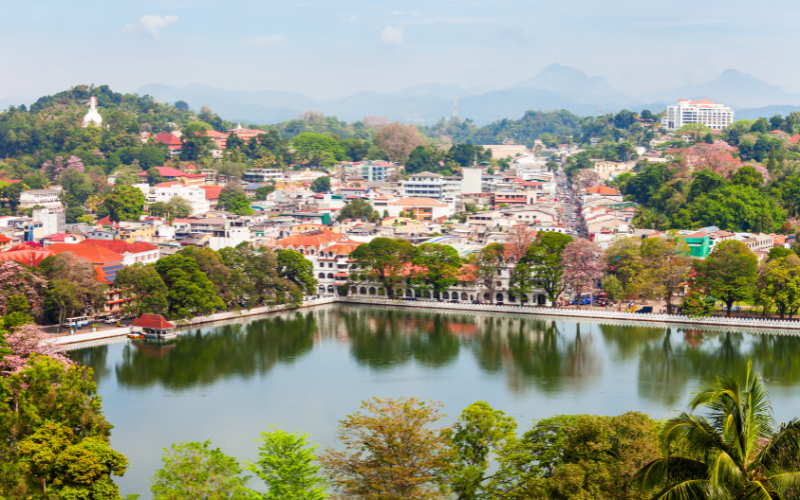
It’s a fascinating city, with bustling markets, colonial architecture, Buddhist temples, traditional shops and countless interesting corners to explore.
But navigating its busy streets on a motorcycle, particularly while wearing protective riding gear, isn’t necessarily the most enjoyable way to discover it.
That’s why we sometimes prefer to explore Kandy on foot or by tuk-tuk. It allows guests to visit attractions, browse shops, stop at cafés and soak up the atmosphere without worrying about traffic, parking or carrying helmets and jackets.
It also gives everyone a welcome break from the saddle.
These may seem like small details when reading an itinerary, but they can make a considerable difference to the overall experience.
For us, a well-designed motorcycle holiday isn’t about maximising the number of hours spent riding. It’s about finding the right balance between scenic roads, cultural discoveries, authentic experiences and relaxation.
When comparing motorcycle tour packages, don’t simply check whether entrance fees are included.
Look at the actual itinerary and consider how many attractions are scheduled, what those visits cost and whether the experiences appeal to you.
Find out whether local guides, safari vehicles, boat trips and transfers are included or charged separately.
Also consider how much flexibility the operator offers.
Are guests expected to participate in every activity, or can they occasionally skip a visit and enjoy some free time?
And if an attraction requires additional transport, such as a tuk-tuk or minibus, who covers that expense?
Our advice: Set aside a realistic budget for cultural attractions and optional activities, but don’t feel obliged to visit everything.
Sri Lanka offers an extraordinary variety of experiences, and the best motorcycle holiday is one that allows you to enjoy the ones that matter most to you.
After all, sometimes a quiet afternoon by the pool, a walk through a local market or a spontaneous conversation over a cup of tea can be just as memorable as visiting a famous monument.
6. Independent vs Guided Motorcycle Tours: What Does It Really Cost?
Now that we’ve explored the various expenses involved in organising a motorcycle tour in Sri Lanka, let’s put everything together and see how the costs compare.
Is it cheaper to rent a motorcycle and explore independently, or join a fully supported guided tour?
The answer is fairly straightforward: independent motorcycle travel is generally cheaper, but the difference isn’t always as simple as it first appears.
To make a meaningful comparison, we’ll look at similar standards of accommodation, motorcycles and meals, while recognising that the two experiences offer different levels of flexibility, organisation and support.
After all, comparing a budget backpacking adventure with a premium motorcycle holiday wouldn’t tell us very much.
For this example, we’ll consider a 12-day, 11-night motorcycle holiday in Sri Lanka, with one rider travelling alone, renting a Royal Enfield Classic 350 and staying in a private room at a selection of comfortable 3- and 4-star hotels.
How Much Would the Same Holiday Cost Independently?
For independent travellers, the main advantage is the freedom to organise everything according to their own preferences and budget.
You choose your motorcycle, accommodation, restaurants, routes and activities, and can adjust your plans whenever you wish. However, you also need to arrange and pay for each component separately.
Here’s an illustrative breakdown of what a comfortable 12-day motorcycle holiday in Sri Lanka might cost.
| Expense | Independent traveller |
|---|---|
| Royal Enfield Classic 350 rental (12 days) | $420–540 |
| Accommodation in 3- and 4-star hotels, half-board (11 nights) | $1,100–1,650 |
| Lunches, snacks and refreshments | $120–200 |
| Fuel | $50–80 |
| Motorcycle insurance and driving permits | $60–150 |
| Airport transfers | $40–80 |
| Additional local transport and miscellaneous expenses | $30–80 |
| Estimated total | $1,820–2,780 |
All prices are in US dollars and represent approximate costs for one rider travelling independently with single-room accommodation. Hotel prices vary considerably by season and location. The estimate excludes international flights, visas, personal travel insurance, alcoholic beverages, entrance fees and optional activities.
The accommodation allowance assumes comfortable hotels rather than basic guesthouses. Breakfast and dinner are included in the hotel budget, so the separate food allowance covers lunches and refreshments.
A traveller choosing inexpensive accommodation and simple restaurants could spend considerably less, while someone staying in boutique or luxury properties could spend much more.
For this comparison, we’re focusing on a comfortable holiday with standards broadly comparable to those offered by a professionally organised motorcycle tour.
How Does This Compare with a Fully Supported Tour?
Let’s use a real example from Ride On Motorcycle Tours: our Journey in the Tropical Pearl, a fully supported motorcycle tour in Sri Lanka.
For this comparison, a 12-day tour costs US$3,655 per rider, with an additional US$460 single-room supplement, bringing the total to US$4,115 for someone travelling alone.
The tour includes carefully selected 3- and 4-star hotels, a Royal Enfield Classic 350, most meals, fuel, motorcycle insurance, driving permit arrangements, airport transfers and a dedicated support team.
Here’s how the two options compare.
| Comfortable independent travel | Ride On fully supported tour | |
|---|---|---|
| Duration | 12 days / 11 nights | 12 days / 11 nights |
| Accommodation | Private room, 3- and 4-star hotels | Private room, selected 3- and 4-star hotels |
| Motorcycle | Royal Enfield Classic 350 | Royal Enfield Classic 350 |
| Meals | Half-board, plus budget for lunches | Most meals included |
| Drinking water, snacks and refreshments | Purchased separately (budgeted) | Included during riding days |
| Fuel | Budgeted separately | Included |
| Motorcycle insurance | Budgeted separately | Included |
| Temporary driving licence and required endorsements | Self-arranged and budgeted | Arranged and included |
| Airport transfers | Self-arranged and budgeted | Included |
| Road Captain and Tour Leader | Not included | Included |
| Dedicated mechanic | Not included | Included |
| Support vehicle and luggage transportation | Not included | Included |
| Cultural attraction entrance fees and optional activities | Excluded | Paid separately |
| Total price per rider | US$1,820–2,780 | US$4,115 |
Independent travel costs are estimates, while the Ride On figure is an example of our tour pricing at the time of writing. Both exclude international flights, visas, personal travel insurance, entrance fees and optional activities.
The difference is approximately US$1,335–2,295, equivalent to around US$111–191 per day.
That’s a significant amount of money, and it’s worth understanding what the additional services provide.
What Do You Get for the Additional Cost?
The main difference between independent travel and a fully supported motorcycle tour isn’t the motorcycle or the accommodation. It’s the level of organisation, assistance and convenience provided throughout the journey.
On a guided tour, the routes have been researched, hotels and restaurants selected, reservations arranged and a support team is available throughout the trip. Luggage is transported separately, mechanical assistance is on hand and guests can concentrate on enjoying the ride rather than managing the daily logistics.
Independent travellers can certainly arrange some of these services themselves, but they also have the freedom to change their plans, explore at their own pace and choose exactly where to spend their money.
Ultimately, neither option is inherently better. The choice comes down to your budget, preferred travel style and how much of the planning and organisation you’d like to handle yourself.
Why Group Size Makes a Difference
One of the factors influencing the price of a fully supported motorcycle tour is the number of participants.
A support vehicle, Road Captain, Tour Leader and mechanic are generally required regardless of whether the group consists of four riders or ten participants. The fewer people sharing these expenses, the higher the cost per person.
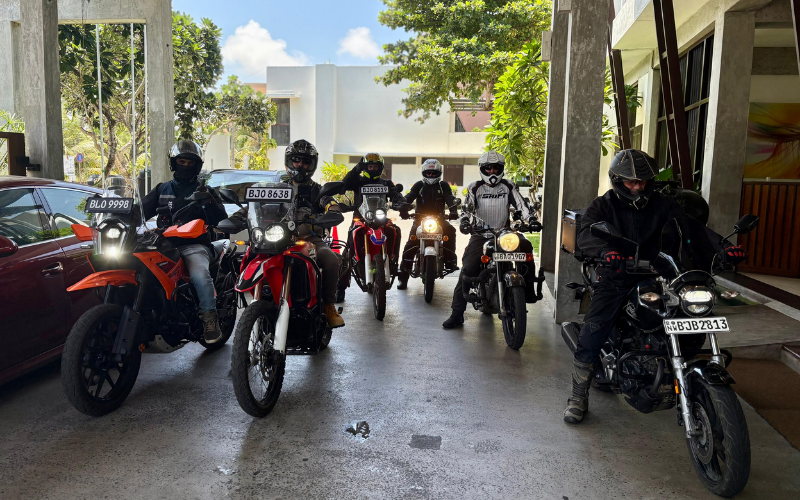
At Ride On, our scheduled departures require a minimum of four riders, and we generally aim for around six riders, which we consider a good balance between operational efficiency and maintaining a personal, small-group atmosphere.
We deliberately limit our tours to a maximum of ten participants, including both riders and pillion passengers. For example, five couples travelling together on five motorcycles would already fill the tour.
Larger groups might allow certain expenses to be distributed among more people, but they would also change the nature of the experience.
Smaller groups are easier to manage on narrow secondary roads, allow for more spontaneous stops and give our team more opportunities to interact personally with each guest.
For us, keeping groups small is a deliberate choice. We believe the more personal experience is worth preserving, even if it means a higher cost per participant.
Choosing the Right Motorcycle Tour for Your Budget
The cost of a motorcycle tour in Sri Lanka depends on far more than the number of days or kilometres travelled. The motorcycle, accommodation, meals, support services, group size and included activities can all make a significant difference to the final price.
Independent motorcycle travel is generally the more affordable option, particularly for those who enjoy planning their own routes and travelling at their own pace. Fully supported tours cost more, but offer a different experience, combining carefully designed itineraries with local knowledge, logistical support and the convenience of having most arrangements taken care of.
Whichever option you choose, the most important thing is to understand exactly what’s included, allow for additional expenses and select a holiday that matches your expectations.
After all, the best motorcycle tour isn’t necessarily the cheapest or the most expensive. It’s the one that gives you the experience you’re looking for, at a price you’re comfortable paying.

Simone Loganathan
Founder @ Ride On Sri Lanka
Chat with us
Click to chat on whatsapp
Latest Articles
-
How Much Does a Motorcycle Tour in Sri Lanka Really Cost?
-
13 Sri Lanka Food Experiences on a Motorcycle Tour
-
Temples, Tea Country & Ocean Breeze
-
Motorcycle Holiday Guide: Choosing the Right Type of Motorcycle Tour
-
Introducing the "2027 First Riders" Offer
-
Best Motorcycle Routes in Sri Lanka
-
What is the Cultural Triangle?
-
Motorcycle Rental in Sri Lanka
-
The Ultimate Guide to Travel in Sri Lanka by Motorcycle
-
Understanding Sri Lanka’s Weather: A Guide for Riders
-
A Motorcyclist’s Paradise: Sri Lanka
